Learning & teaching


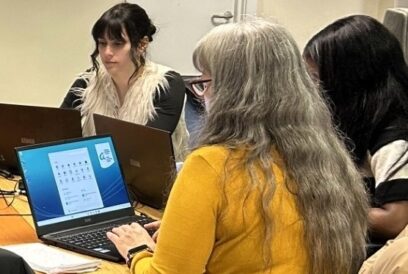
In his column, Professor Bernd Käpplinger asks: “Why should we use ‘resilience’ instead of ‘adapting’?” According to him, ‘adapting’ openly tells people that they must adapt to changes, making it easier to criticise as purely reactive or even oppressive. Photo: Canva.
In his column, Professor Bernd Käpplinger asks: “Why should we use ‘resilience’ instead of ‘adapting’?” According to him, ‘adapting’ openly tells people that they must adapt to changes, making it easier to criticise as purely reactive or even oppressive. Photo: Canva.
“The buzz around the word ‘resilience’ masks structural problems and promotes passive adaptation over transformative change,” argues Bernd Käpplinger, Professor at Justus-Liebig-University Giessen, Germany.
Resilience has become a buzzword. When Caroline Dietz and I published a research study in 2021 on the use of the word and concept of resilience in German adult education centre (Volkshochschule) programmes, a rise was already noticeable, but the total number of findings was still limited. By 2025, its usage had increased by more than 300 percent.
Is this massive expansion proof that the term and concept of resilience are beneficial?
Certainly not. Adult education always needs to be up-to-date and include fashionable terms. But fashions come and go. Perhaps resilience will make only a short appearance and then vanish? I don’t think so. I see certain characteristics in how the term is used that reveal a lot about current power structures, which will most likely and unfortunately not change unless we act differently.
For example, some critics challenge the individual focus of resilience and call for a stronger focus on communities and community education. I agree, but I am not sure that a community focus alone will help.
I WONDER WHY we should use “resilience” instead of “coping” or “adapting”. Perhaps we are seeing a typical case of language being used as a disguise?
From my point of view, “adapting” is at least somewhat honest. It openly tells people that they must simply adapt to changes. That is something you can more easily criticise as being purely reactive or even oppressive, since people are expected to react – or bear the consequences if they resist.
Are we seeing a language being used as a disguise?
Being “resilient” hides this primary goal of adaptation much better. It can be compared to corporate talk about “synergy effects” during mergers, which usually just means job cuts and shrinking two units into one with more profit for shareholders.
THERE IS ALSO AN ILLUSION inherent in resilience. My first contact with the topic was at a conference taking place at Austria’s Federal Institute for Adult Education (Bundesinstitut für Erwachsenenbildung, bifeb). The moderator told us that with enough resilience, people could even survive the Holocaust. That was and remains shocking to me. Survival in extreme times is deeply connected to luck, fate or social positioning.
Later, our study found further education courses designed to help childcare workers teach resilience to pre-kindergarten children. However, genuine research casts doubt on whether resilience can actually be taught, and I would much rather see children being taught other things.
Of course, so-called disaster education has value but nurturing the illusion that you just have to prepare individually or collectively to survive almost anything obscures the real risks, especially if we continue with business as usual in many other aspects. We can spend a lot of money on bottled water, dry food and shelters, but I doubt that such spending is wise when we should instead invest it in changing current political and ecological trajectories.
OVERALL, I ARGUE that the buzz around resilience is largely about using language to hide structural problems and nurture the illusion that we can survive any catastrophe simply by learning how to prepare for it. It promotes defensive learning – focusing on how to react in the interest of the powerful – instead of expansive or transformative learning that explores how to change harmful developments and power structures. The latter is, of course, highly challenging.
However, we must continue to try, rather than teaching a passive state of mere adaptation and coping, although this is of course also important and one element of adult learning and adult life. Progressive adult education should strive for much more than that. We should be more reluctant and critical about resilience.
References:
Dietz, Caroline & Käpplinger, Bernd (2021). Resilienz in Programmen der Erwachsenenbildung. Die fehlende (Selbst-)Optimierung? In: Schemmann, Michael (Ed.). International Yearbook of Adult Education. Bielefeld, pp. 117-135. https://www.wbv.de/shop/Resilienz-in-Programmen-der-Erwachsenenbildung-Die-fehlende-Selbst-Optimierung-6004675W007
Elfert, Maren & Balakrishnan, Pravindharan (2025). Crisis narratives as drivers of shifts in the global governance of education. Globalisation, Societies and Education. https://www.tandfonline.com/doi/full/10.1080/14767724.2025.2547903#d1e839

This article is part of the theme ‘Adult Education and Resilience 2026’.
Read related articles here