Learning & teaching


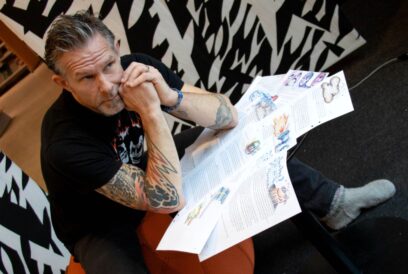
“The share of adults with low skills has increased significantly over the past decade,” Anja Meierkord comments on the latest PIAAC results. Technology and AI are seen not only as drivers of progress, but also as possible contributors to skill decline. Photo: Anja Meierkord.
“The share of adults with low skills has increased significantly over the past decade,” Anja Meierkord comments on the latest PIAAC results. Technology and AI are seen not only as drivers of progress, but also as possible contributors to skill decline. Photo: Anja Meierkord.
With a third of adults having low literacy and numeracy skills, how can we build a society of engaged people? OECD’s Anja Meierkord discusses the PIAAC results and how European countries are tackling growing skill gaps.
When Anja Meierkord, analyst at the OECD’s Directorate for Education and Skills, first received the results of the 2023 Survey of Adults Skills (PIAAC), she could hardly believe what she was seeing.
“Instinctively, we thought there must have been a mistake, so we went back through the data to make sure it was reliable,” she tells ELM Magazine. The second check confirmed a surprising and worrying reality: foundational skills had declined in many countries over the past decade.
“Nearly one in three adults across OECD countries lack foundational literacy and numeracy skills. This means they don’t have the fundamental skills on which all other learning is built. These are essential for participating effectively in modern economies and societies,” explains Meierkord.
The consequences can touch every aspect of life, from finding a specific piece of information in a document to carrying out everyday calculations.
“These ‘low performers’ use almost all their cognitive effort simply to understand what they are reading. Although many can understand basic sentences, they tend to do so more slowly and less accurately. It’s not an unwillingness to think critically; rather, so much mental energy is devoted to decoding the information that there is little capacity to evaluate or question it,” the analyst explains.
The implications of low foundational skills range from difficulties in assessing information and managing personal finances to wider economic consequences. Three in 10 adults with low foundational skills are not participating in the labour market and their earnings are also affected.
“The employment and economic impacts tend to receive most attention, but there are more subtle, equally important aspects of life that are negatively affected by low foundational skills,” says Meierkord.
For example, some studies have suggested a link between higher levels of education and cognitive skills and healthier behaviour. A person’s health, wellbeing and overall life satisfaction can therefore be linked to their position on the foundational skills spectrum.
“On top of this, people performing at the higher levels tend to feel more politically represented, they believe their voices are heard and generally report higher levels of social and political trust. Foundational skills are a matter of democracy and social cohesion too.”
Despite the bleak results of the survey, significant differences emerge between countries. At the more positive end of the scale, Japan and Finland recorded relatively low shares of adults with low foundational skills, at 13% and 15% respectively. At the other end, the figures reached 48% in Poland and 61% in Chile.
“What struck us was that in 11 of the 27 countries that also participated in the previous PIAAC cycle in 2018, the share of adults with low skills increased significantly over the past decade,” Meierkord says. Only Denmark and Finland recorded a significant reduction in the proportion of adults with low foundational skills.
Meierkord stresses that more research is needed to identify the reasons behind these increases and that, for now, any explanation remains speculative. Among the possible factors, however, are technological developments and artificial intelligence (AI), which, for the first time, are being seen not as drivers of future progress, but as potential contributors to declining cognitive skills.
The quality of education, particularly adult education, is also likely to play an important role. “However, the central policy issue remains the so-called Matthew effect.”
This refers to the tendency for adults with lower skill levels, who would benefit most from further learning, to be the least likely to participate in lifelong education.
“As a result, those who already have high skills will acquire even more, while those at the lower end of the spectrum face barriers of confidence, awareness, time and language and will not be able to access these resources. Funding has often failed to reach those who need it most, which exacerbates the gaps identified in the PIAAC survey between higher and lower performers,” says the analyst.
To address this issue, Meierkord and her team have tried to identify common characteristics among adults with low foundational skills. “The first, and strongest predictor, is educational attainment. A person’s level of education is one of the strongest indicators of low literacy and numeracy skills.”
However, in other cases, especially Nordic countries, migration background and language barriers play a more significant role.
“We have identified three profiles of adults with low foundational skills: older natives from low-education families, migrants facing language barriers and so-called unexpected underperformers.”
These are people who come from apparently favourable backgrounds, including medium to high levels of education, but have low foundational skills. This may be linked to social factors, such as caring responsibilities, hidden disabilities or other circumstances.
“This shows that people with low foundational skills can be found across all segments of society. The group is far more diverse than we might assume.”
People with low foundational skills can be found across all segments of society.
According to the analyst, this diversity is precisely what makes the issue so difficult to address.
“We often overlook the fact that there is not a secret group of low-skilled adults that we simply have to find and support. We have ‘unexpected underperformers’, people who do not feel comfortable disclosing their skills gaps, particularly in the workplace and many others who, despite low-performance levels, still enjoy relatively good working conditions and levels of life satisfaction.”
Around a third of adults with low foundational skills fall into this category, showing that “one’s life can still function well and that foundational skills may not be the only measure that matters. We should also recognise the other capabilities individuals possess,” adds Meierkord.
If there is no single profile of adults with low foundational skills, there is also no single solution. “Identifying these learners is only part of the challenge; the harder task is reaching them and encouraging them to engage in adult learning opportunities,” she says.
One possible strategy is to raise awareness. Many adults do not recognise their own skills gaps, making it essential to demonstrate the benefits of participating in learning programmes and to offer tangible outcomes such as improved employment prospects or higher wages. One example is Switzerland’s “Better Basic Skills in the Workplace” programme. With federal financial support, Swiss cantons develop their own initiatives to support adults with low literacy and numeracy skills. The activities focus on raising awareness among the general population and are often closely linked to workplace tasks.
“Active outreach through trusted intermediaries such as employers, trade unions, organisations and healthcare providers is a key feature of successful programmes,” explains Meierkord. For instance, in the United Kingdom, the Unionlearn programme led by the Trades Union Congress used a network of Union Learning Representatives to support employees. Studies showed that 26% of participants reported improvements in literacy.
Active outreach through trusted intermediaries is a key feature of successful programmes.
Another initiative highlighted by Meierkord is Norway’s Skills Plus programme, which embedded the development of foundational skills within the workplace. “Contextualised learning helps adults develop their skills through meaningful, practical tasks. In many cases, this is more effective than teaching these skills in the abstract.” In the Norwegian case, employers covered the costs of training and participants were able to access them for free during working hours.
The workplace is therefore a crucial setting in which to identify, engage and support adults with low foundational skills. Reaching them outside the labour market is considerably more difficult. Yet, many of them are unemployed. “In Germany, some programmes have attempted to engage these people through employment services, for example by offering financial incentives to those who take part in training initiatives,” says Meierkord.
Whether through trade unions, employers or social services, local actors have proven essential in identifying and supporting adults with low foundational skills. “But they can’t do all the work. We need strong central legislation and public funding,” Meierkord argues.
She returns to the issue of the Matthew effect, stressing that resources should be directed not only towards training provision itself, but also towards outreach.
“Currently, most funding goes directly to education programmes, and in many countries even that funding is being cut. We need to invest in helping people discover these opportunities and ensuring that they can access them.”
“If we don’t do that,” she continues, “we will see a further decline in literacy, numeracy, adaptive problem-solving and critical thinking, which are the very skills that we need most in this new age of AI.”
Ultimately, she argues, declining foundational skills pose a threat not only to individuals but also to our democracies.
“It’s not just about fewer career opportunities and lower wages. People who struggle to understand the information they receive tend to feel more politically disenfranchised, misrepresented and overlooked and risk feeling socially and politically isolated, further weakening the already fragile social fabric of our modern world.”