Learning & teaching

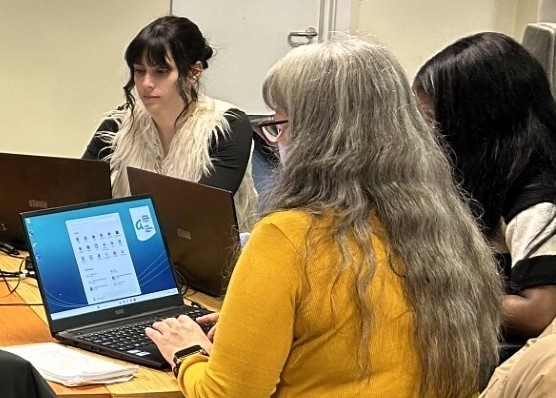
Welsh organisations offer training in employability skills for adult community learners. These courses often also include resilience skills focusing on the learners’ confidence building and assertiveness. Photo: ALW.
Welsh organisations offer training in employability skills for adult community learners. These courses often also include resilience skills focusing on the learners’ confidence building and assertiveness. Photo: ALW.
Resilience skills are embedded in employability courses by Adult Learning Wales, providing mature jobseekers and community newcomers with a range of ‘soft skills’ alongside the nuts and bolts of jobhunting.
Wales has the UK’s lowest employment rate – and since the pandemic, Wales’s employment gap with the rest of the UK has been widening.
As part of efforts to boost the economic participation rate, many Welsh institutions and organisations offer training in employability skills for adult community learners. Over the past decade and a half, these courses have often included resilience skills. That produces a range of benefits.
“When employability courses are focused on the learners’ resilience and confidence building, they’re better attended and the learners are more engaged,” says Cecilia Forsythe, Curriculum Development Coordinator at Adult Learning Wales (ALW), the national adult community learning organisation.
“The pathway to finding work can be very daunting and exhausting. It produces high levels of anxiety. So we embed resilience in our courses to support learners to face their employability pathway in a friendlier, de-stressed way,” explains Forsythe.
“When employability courses are focused on the learners’ resilience and confidence building, they’re better attended and the learners are more engaged,” says Cecilia Forsythe. Photo: ALW.
Resilience, building self-esteem and assertiveness are examples of ‘soft skills’ included in employability skills.
“The soft skills typically taught are confidence building and emotional regulation, problem-solving, self-reflection, self-compassion and assertiveness,” she explains, adding that “confidence building is so closely linked to resilience.”
ALW offers specific accredited units on resilience skills at different levels, accredited by the Welsh awarding body Agored Cymru.
Then there are ‘hard skills’ like practising for interviews and psychometric or situational judgement tests, which many employers use in their recruitment processes.
“Learners develop skills such as communication in the workplace and skills involving interviews, CV writing, job applications and teamwork as well as digital and interpersonal skills – all approached with a resilient mindset.”
One learner who is thriving thanks to these entwined soft and hard skills is Anisha Julien, who attends digital skills and employability classes in the old spa town of Llandrindod Wells.
“I’ve been doing the Basic Digital Skills course now for about nine months, and over this period I can gladly say that I’ve learned and developed a number of resilience skills such as problem-solving, patience when learning new skills and confidence,” says Julien.
Asking for help is actually a strength, not a weakness.
“The most important skills for me have been social connection and asking for help. Before the course, I was quite introverted and hesitant to speak in groups, especially as I’m not from the local area,” says Julien, a young mother who moved to Wales from Grenada.

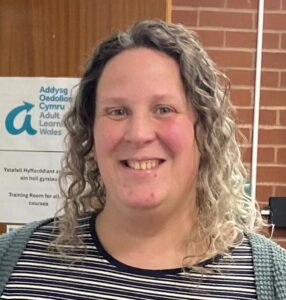
“I’ve also learned resilience skills such as problem-solving, patience and confidence while attending the Basic Digital Skills course,” says Anisha Julien. Photo: ALW.
“These skills have really helped me become more confident and proactive. I now feel comfortable asking questions, contributing in class, and working with others to support our learning,” she says.
“One surprise was realising that asking for help is actually a strength, not a weakness, and it has helped me improve faster,” says Julien.
ALW tutors who are trained to embed resilience into their courses – and their own backgrounds can provide rich experience in this area.
“For example, one of our employability tutors is also a qualified riding instructor,” says Forsythe. “During her lessons, you can see how she transfers the encouragement to do well so that learners leave each session feeling empowered and confident. When someone has been through failure, she helps them to ‘get back on the horse’ and not give up.”
Another employability tutor is a former probation officer, who helped ex-offenders to reintegrate into society and look for work, along with other support.
“She has a background in how to build up someone’s confidence, to leave behind what happened in the past and look at life in a different way,” says Forsythe.
Tutors are trained to embed resilience into their courses.
There is also a wide variety of learners, including some who have been out of work for many years and others who struggle with their mental or physical health. Some are ex-offenders, single parents returning to work, refugees, people who have been made redundant after long careers.”
Most of the long-term unemployed are referred to ALW by the Department of Work and Pensions in hopes that they can be supported back into employment.
“We’ve received feedback that some learners who attended our classes have secured work after years of being unsuccessful,” says Forsythe, who is also involved in a refugee resettlement scheme.
“When non-English-speaking families arrive in our area, we provide English or Welsh for Speakers of Other Languages training. We also embed resilience, employability, digital skills, and information about life in the UK along with language skills.”
In general, resilience skills are baked into the delivery of employability skills.
“We tackle resilience skills in such a way that in certain cases the learners don’t even realise it. If we call it resilience directly, we’ve sometimes gotten pushback from them. A lot of these learners, depending on their background, tend to be kind of stressed,” she says.
“So we teach them how to de-stress and to view setbacks as opportunities to reflect and learn from, focusing on what went well and what could have been done differently. Most importantly, they realise that certain things are out of their control. So instead of feeling discouraged when something doesn’t go the way they want, they have skills to overcome negative episodes and grow mentally and emotionally stronger.”
They learn skills to overcome negative episodes and grow mentally stronger.
With such a range of learners, the teaching of skills varies.
“We teach groups of learners while differentiating each one’s needs through individual learning plans. For the individual learning plan, the tutor sits down with the learner individually and discusses their skills, needs, hopes and what they find difficult to cope with,” Forsythe notes.
“We believe it’s important to identify the needs of each learner within a group. Often when we cover something that one learner identified, another may say, ‘oh, I actually have that need as well’.”
In Forsythe’s experience, this approach makes the learners feel supported, understood and cared for.
“The tailoring of the courses to the individual needs of the learners makes them feel safe, content and empowered. The teaching atmosphere makes the environment relaxed and welcoming, which reflects learner satisfaction recorded in feedback forms,” she points out.
Learners are preparing to join a workforce where employers’ demands and expectations have shifted in recent years.
“Since the pandemic, a lot of companies have become stricter about which skills they look for. For instance, a lot of interpersonal skills were lost during the pandemic. If you go to a supermarket, staff may try to avoid talking to you and are just more distant. So one of the requests has been more communication, teamwork and customer service, being more open and interacting with others.”
The ALW Learner Services Department closely monitors whether learners have found the courses useful.
Many have gone from depending on social benefits to financial independence, while others have moved on to full-time further education to get qualified for future employment.
Some have moved on to full-time further education to get qualified for future employment.
“In certain cases, we’ve received feedback from learners directly, who are delighted and over the moon, saying that the care and support received in their courses allowed them to find their dream jobs,” recalls Forsythe.
“For me, it’s very rewarding because I live in a small town, and sometimes I see some of our learners working at the supermarket, and they come up to me and say, ‘see, I got a job!’. It’s so rewarding that sometimes you end up in tears because you remember how that person was when you first met. Now they’re so much more interactive and communicative, so that’s really nice.”
As far as best practices, Forsythe points to the use of individual learning plans to focus on each learner’s needs, as well as the use of updated information related to the skills needed to succeed at finding and keeping work nowadays.
“Those are our main focuses, alongside supporting the mental health and wellbeing of every single learner,” she says.
The main challenges faced in these courses are setbacks in learners’ personal lives. These range from physical and mental health challenges to financial challenges, all of which may hinder them from attending classes, says Forsythe.
“When we see somebody struggling or not attending classes, we call to see if there’s anything that they need. We have a financial contingency fund to help people attend classes, by for example, paying for travel or loaning them digital equipment so they can access them online,” she says.
In general, ALW tries to arrange classes so that learners can reach them by public transport.
“We don’t have a campus; we take the tutors to the learners. So sometimes it may be at a community centre in the middle of the hills, where there’s nothing else around apart from farming fields and sheep.”

This article is part of the theme ‘Adult Education and Resilience 2026’.
Read related articles here