Learning & teaching

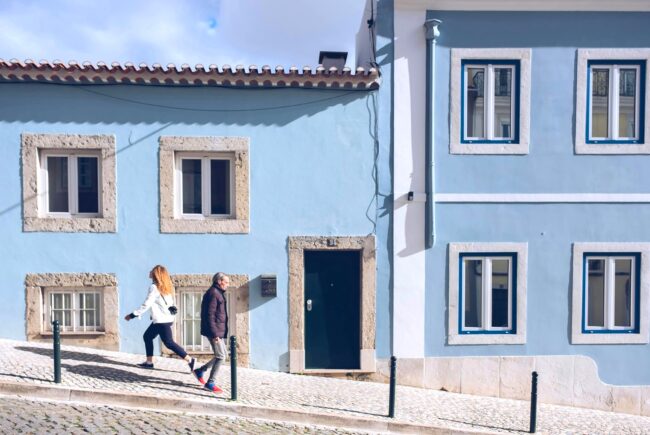
According to the PIAAC study, 40% of adults in Portugal have low skills in literacy, numeracy and problem‑solving. “They lack the basic competencies needed to navigate today’s society,” says João Queirós, a professor at the Polytechnic University of Porto. Photo: Freguesia de Estrela on Unsplash.
According to the PIAAC study, 40% of adults in Portugal have low skills in literacy, numeracy and problem‑solving. “They lack the basic competencies needed to navigate today’s society,” says João Queirós, a professor at the Polytechnic University of Porto. Photo: Freguesia de Estrela on Unsplash.
A PIAAC study on adult skills reveals a worrying picture in Portugal, says sociologist João Queirós from the Polytechnic University of Porto. He also has a set of practical proposals to improve the situation. Will the government take the lead?
The 2023 Survey of Adult Skills (PIAAC) – the OECD’s international assessment of adults’ literacy, numeracy and problem‑solving abilities – revealed that four in ten adults in Portugal have low basic skills. To understand why the country recorded some of the weakest results in Europe, we spoke to João Queirós, a sociologist and professor at the School of Education at the Polytechnic University of Porto.
“While the scale of the PIAAC study’s poor results came as a shock to many in Portugal, those of us who have spent years researching adult education in the country were far less surprised,” says Queirós, describing his initial thoughts on the results of the OECD survey, published in December 2024.

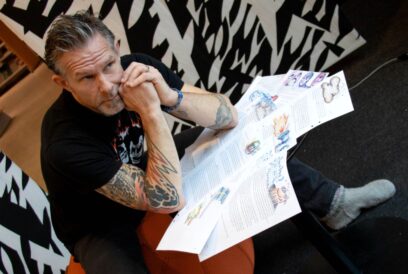
The PIAAC study showed a marked gap between low and high performers. “People with low skills tend to earn lower wages and report lower life satisfaction,” says João Queirós. Photo: João Queirós.
Between 2019 and 2024, Queirós served as Deputy National Project Manager for the OECD’s PIAAC in Portugal, giving him first-hand insight into how the study is conducted and how the data is gathered, but also into the broader landscape of adult learning in the country – a perspective sharpened by his background as a sociologist.
He stresses how significant it was for Portugal to finally obtain results in 2023, as this marked the first time the country had successfully completed the survey.
“More than a decade ago, we initially joined the first PIAAC cycle, but in 2011 a change of government led the new administration to withdraw Portugal from the study,” Queirós explains. As a result, there is virtually no information on the performance of Portuguese adult learners over the past ten years, making it difficult to draw comparisons in the way other countries can.
“We can only assume that Portugal experienced a similar stagnation to that seen across other OECD countries, particularly in literacy, numeracy and adaptive problem‑solving,” the sociologist says.
Although Portuguese researchers cannot make a chronological comparison, they adopted a synchronic approach and were still able to identify major challenges highlighted by the results.
“What the study reveals is a worrying picture: around 40% of adults have generally low skills across all three core domains. We’re talking below the OECD average and at or below Level 1, meaning they lack the basic competencies needed to navigate the demands of today’s society and economy,” Queirós explains.
They lack the basic competencies needed to navigate today’s society.
“The picture that emerges is far from reassuring. Even the country’s illiteracy rate stands at 3%. It is a small figure and one that has fallen over time,” the professor acknowledges, “but this decline is due only to demographic change as older generations pass away, not to any meaningful measures to tackle the problem.”
The international study was met with surprise and even shock in Portugal, with many media outlets highlighting the country’s strikingly low levels of literacy and numeracy compared with the rest of the OECD and the European Union.
“Politicians in particular had expected better results. They were under the illusion that the progress made over the past 20 to 30 years would have had a broader impact,” he says.
However, he explains that most of that progress has benefited younger generations. Given the high proportion of adults with low qualifications in Portugal, the findings were somewhat predictable to him.
“Portugal has the lowest level of academic qualifications in the EU, and around 38-40% of adults have a level of education below upper secondary, that is, fewer than 12 years of schooling,” he notes.
This reflects the crucial role that education and socio‑economic background play in shaping adults’ basic skills. “Social inequality is the most striking factor we need to tackle if we want to address the issues highlighted by this survey,” says Queirós.
The study shows a marked gap between low and high performers, demonstrating a clear link between skill levels and individuals’ economic outcomes.
“It’s a vicious circle,” he notes. “People with low skills have fewer opportunities in both work and life, and they tend to earn lower wages and report lower life satisfaction.”
The main drivers of poor performance are educational attainment, job qualifications and socio‑economic background. While Portugal’s high performers reached levels comparable with their OECD counterparts, the results for low performers were significantly worse.
“We urgently need to focus more on low performers and find ways to narrow this gap,” Queirós warns. “If combined with existing inequalities, it risks leading, in the long term, to social conflict, weakened social cohesion and greater division.”
The gap between low and high performers risks leading to weakened social cohesion.
Rampant disinformation, fuelled by social media and extremist populism, is one of Europe’s most pressing challenges today. One of the most effective ways to counter it is to ensure that citizens have the skills and tools to critically assess the information they consume, enabling them to make informed decisions about their lives.
“We are already seeing the consequences of large sections of the population lacking basic skills in Portugal,” Queirós says.
“Take the rise of the far right, or the increase in social conflict, polarisation and division. These trends are, at least in part, connected to people’s ability – or inability – to process information and make sense of the world around them. If we continue down this path, it could eventually pose a threat to democracy.”
Despite the high stakes, Queirós laments that the Portuguese government has not taken the findings seriously. “After the initial shock and media attention, politicians and policymakers have essentially chosen to ignore the harsh reality revealed by the survey,” he says.
Portugal is currently undergoing a major education reform, with some agencies being closed or merged. Many scholars and researchers are increasingly concerned about what this will mean for learners, particularly adults. “There is a widespread sense of insecurity, and there is no clear idea of what to expect from our decision‑makers,” the sociologist says.
“What I do see,” he continues, “is an emphasis on young people and early education, and that is clearly important, because they were the strongest performers in the survey.”
What I do see is an emphasis on young people and early education.
Indeed, the only exception in the overall negative results of the PIAAC survey were young adults. People aged 16 to 24 performed better, which Queirós attributes to the recent educational reforms. This is a positive development that has yielded some results.
“However,” he warns, “adult education has been neglected, and we are now witnessing the consequences of that.”
Before the PIAAC study, Queirós and some of his colleagues worked on a National Plan for Adult Literacy (2018-19), aiming to support a set of new measures and practical proposals to drive change in adult education and training, especially among adults with lower qualifications and low literacy. A comprehensive, national plan was never put forward but some new programmes were developed with European funding coming from the Portuguese Recovery and Resilience Plan (NextGenerationEU).
“Firstly, I believe we need to promote basic skills in the workplace, because that is where we can reach adults and understand their needs. But to do that, we need strong partnerships and collaborative networks between public bodies, such as the government, and private actors, like employers. We must also involve civil society, unions, local associations and, of course, citizens themselves,” the sociologist says.
Nevertheless, he insists that action cannot be limited to the workplace, because not all adults are employed.
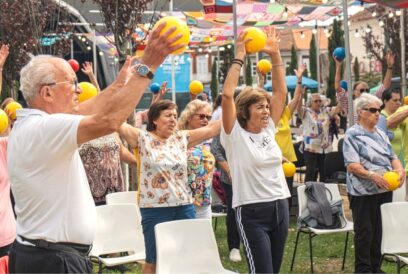
“We’ve completely overlooked a large slice of the population: adults over 65. They are no longer in work but are still citizens who contribute to our society. They were not included in the PIAAC study, so we have no data on their performance, but we can expect it to be poor, on average.”
Action must extend to adults over 65 who are no longer working but still contribute to society.
He also stresses that formal education is only one pathway.
“We need to focus on non‑formal and informal learning as well. But to make that possible, we need national‑level planning and commitment. We can’t just rely on isolated individual initiatives, which is what is happening now.”
This brings him to one of his central demands for improving the situation in the country. “We need not only funding, but also political commitment. The message we are currently getting is that adult education is not a priority, when in fact meaningful change requires clear engagement from policymakers.”
In the absence of that commitment, scholars and researchers have begun taking matters into their own hands. In December 2025, for instance, an initiative at the Polytechnic University of Porto was launched, called the Observatory of Adult Competencies (OCA).
“Our aim with this project,” Queirós explains, “is to further develop research on adult education and training; to promote adult education as a cornerstone of social inclusion and social cohesion; and to contribute to the design and development of new, more robust policies and programs in this domain.”