Learning & teaching


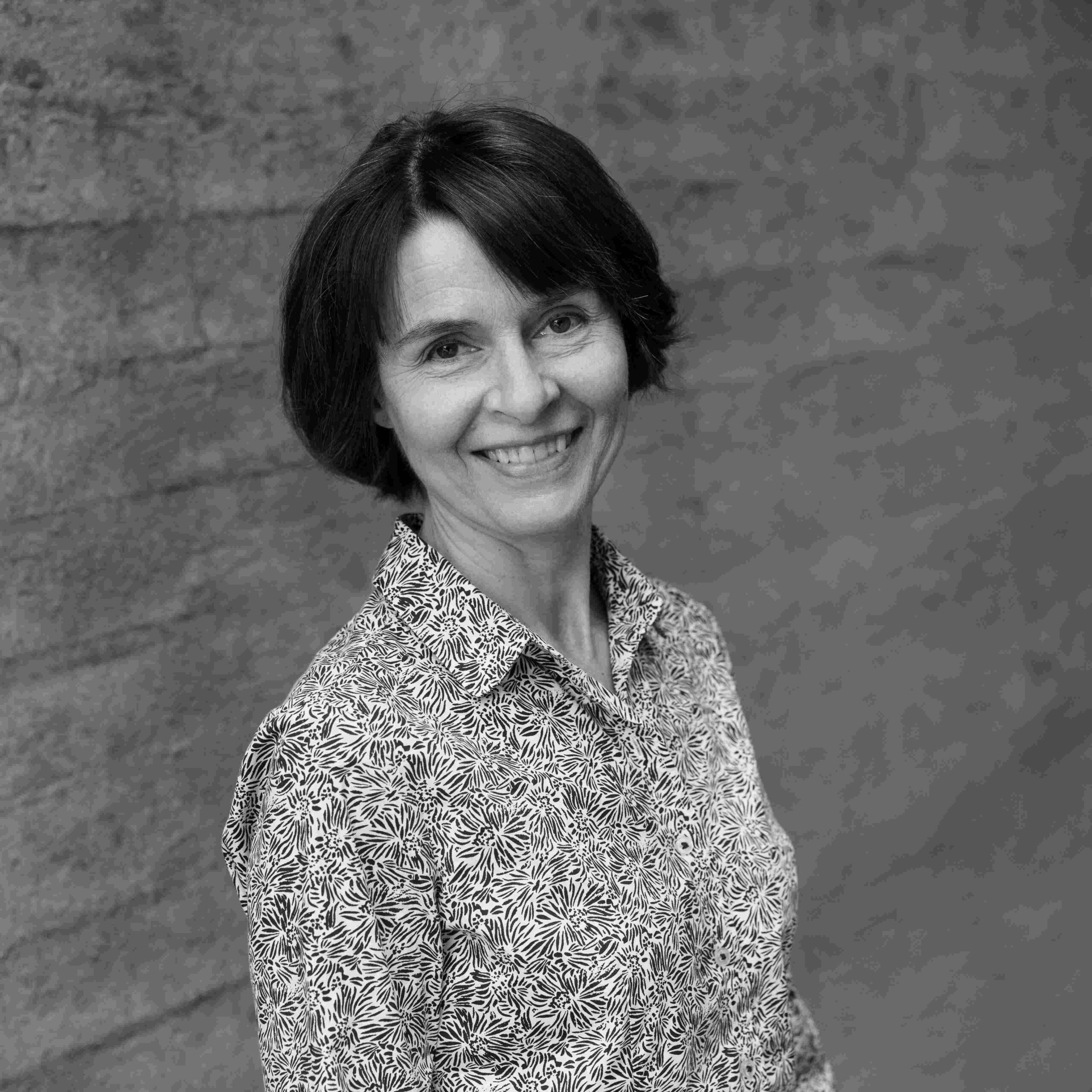
“Meta-skills are essential in the future, as they enable adaptability and critical engagement with change. They keep us intellectually active and responsive throughout our careers and lives,” says Anđela Gojić. Photo: Anđela Gojić.
“Meta-skills are essential in the future, as they enable adaptability and critical engagement with change. They keep us intellectually active and responsive throughout our careers and lives,” says Anđela Gojić. Photo: Anđela Gojić.
“Adult education not only enables the development of others, but also of those working within it. This is what makes it particularly meaningful to me,” says Anđela Gojić, master's student at the University of Belgrade. “Young Voices” is a series highlighting the perspectives of the next generation shaping adult education across Europe.
Not everyone finds their field on the first try. For Anđela Gojić, the path to adult education ran through a period of genuine self-inquiry and a growing fascination with how people learn beyond the classroom. Now studying at the University of Belgrade and working at Cedefop (European Centre for the Development of Vocational Training), she brings both academic grounding and policy experience to the conversation.
I hold a bachelor’s degree in Adult Education (Andragogy) from the Faculty of Philosophy, University of Belgrade in Serbia. Currently I’m pursuing a master’s degree, specialising in continuous professional development at the same faculty.
I also work as a trainee in the VET and Skills department at Cedefop, in a team focused on adult learning and apprenticeships.
My interest in adult education began as a process of self-discovery and exploration rather than a clearly defined academic path. My initial choice of international tourism management was not the right fit, yet it played an important role in helping me better understand what I was actually looking for in academic and professional terms.
What may at first seem like a misaligned decision can often open unexpected directions. In my case, it led me towards a lasting interest in human behaviour, social relations and the ways they are interpreted through the perspectives of the social sciences and humanities.
From this perspective, I explored people’s needs, multifaceted roles and the factors that shape them, firstly through disciplines such as anthropology and psychology. These were part of a broader exploratory process that helped refine my interests and gradually orient me towards adult education.
What drew me to this field was its interdisciplinary nature and its ability to broaden and reshape my understanding of learning and human development beyond traditional, formal contexts, situating them within wider individual and social realities.
The interdisciplinary nature of the field drew me to andragogy.
This perspective continues to shape my view of adult education, particularly its capacity to connect learning with lived experience and to show how context influences the way people learn and interpret their experiences.
This interconnection has had a deeply transformative impact on me as well, not only in terms of my professional role and identity, but also on a personal level and in everyday life.
A dominant focus of my academic work lies in the field of non-formal adult education, with a particular emphasis on the design and delivery of learning.
While my current academic focus is on continuous professional development, I see this as a highly transferable field across different domains – whether we talk about organisational contexts, active citizenship, lifelong learning or other areas that reflect the broader scope of adult education in engaging with diverse dimensions of individual and social life.
What makes this field particularly relevant to me is its direct connection to practice: how learning initiatives are designed in response to real needs, how they are adapted to different groups and how they function in complex, often constrained environments such as workplaces or policy-driven contexts.
This practical dimension – where ideas are translated into concrete educational interventions – is where I see some of the main challenges and meaningful potential for impact.
What makes this field particularly relevant to me is its direct connection to practice.
The breadth of this field resonates with me, as well as the process behind it: understanding people’s realities and needs, as well as the ways in which they learn and translating that understanding into learning experiences that support different dimensions of life, from professional and civic engagement to personal development and relationships.
As the logic of the educational cycle itself suggests, learning begins and evolves from needs. In that sense, learning initiatives play a key role in supporting the development of individuals, organisations and communities, which reflects the dynamic relationship between education and quality of life. In this sense, learning is not a one-time activity, but a continuous process embedded across different spheres of life, closely aligned with the broader vision of lifelong learning societies, where it is understood as a continuous and structural element of both individual and societal development.
Learning is not a one-time activity, but a continuous process embedded across different spheres of life.
Even in my current work within education policy context, this perspective allows me to better understand how learning principles can help developing more effective and responsive policies, as I am able to approach them with an awareness of the full process – from design to implementation.
At the same time, working across different contexts and with diverse groups continuously challenges me to learn and expand my own perspective. This is what makes the field particularly meaningful to me: it not only enables the development of others but also requires ongoing learning and reflection from those working within it, making it, in itself, a lived expression of continuous, lifelong learning.
On their own, learning initiatives are insufficient if there is no enabling policy framework that makes their implementation possible and sustainable. For this reason, I see strong policy structures as essential in ensuring that such initiatives are not only designed, but also effectively embedded in practice.
With this in mind, I would like to contribute to the further development of this field by moving one step further towards the systemic level, engaging with and supporting frameworks such as Sustainable Development Goal 4, which promotes inclusive and equitable quality education and lifelong learning opportunities for all, and exploring how such global commitments are translated into concrete measures and implementation strategies.
At the same time, the transition from the concept of lifelong learning to its everyday practice relies not only on proven strategies and global frameworks, but also on personal development habits and continuous engagement at the individual level. This is why I strive to focus on working on myself, both privately and professionally, and only then through broader social engagement and interaction with others, taking one step closer to making lifelong learning a reality.
Adult education can better connect with younger generations, firstly, by increasing its visibility as a relevant and meaningful field. Many young people are still not aware of its full scope and the opportunities it offers across different areas of life. At the same time, it is equally important to create space for young people to express their needs and perspectives, something in which adult education has strong potential.
This could be achieved through awareness campaigns, as well as initiatives and projects that reflect the connection between adult education and young people’s experiences, helping them better understand the field through their own personal and educational realities.
At the same time, engaging younger generations is essential for the development and sustainability of the field itself, as it continues to grow in relevance and impact.
Engaging younger generations in the field is essential as its impact continues to grow.
More importantly, this is not only about strengthening adult education per se, but also about supporting the development of individuals who are already active members of society or will become so in the future. In that sense, building stronger connections with younger generations creates value for adult education as a field, individuals and for wider social development.
Above all, strong meta-competences are fundamental. Let us take critical thinking as an example. It is a competence that enables us to continuously analyse social realities, question established concepts and practices and engage in an ongoing search for new understanding.
When I first started my studies, I placed strong emphasis on tangible, “hard” outcomes and skills directly linked to employability. Over time I came to understand that in a rapidly changing conditions even these skills depend on a continuous capacity to learn, adapt and evolve.
This is where meta-skills become essential, as they enable sustained learning, adaptability and critical engagement with change. As such, they are what keep us intellectually active and responsive throughout our careers and life.
Adult education is something I often find myself explaining in everyday contexts, as it is still widely misunderstood outside the field. I believe it is difficult to establish one comprehensive framework for everything that adult education encompasses and all of its functions, as it’s context-dependent, shaped by different economic, social, and institutional domains in which learning takes place, as well as broader changes on the global scene.
Therefore, when speaking about adult education, it is important to understand that it is a field characterised by great heterogeneity and variety, encompassing a wide range of domains of professional practice.
Broadly speaking, adult education deals with questions related to all aspects of individuals’ lives and their role in society through the discourse of learning. Such a broad spectrum of domains, as well as its impact across different age groups and stages of life emphasises the need for learning as a constant throughout the lifespan.
It is something we all encounter and engage with, but do not always recognise as such. It appears in the informal analysis of our favourite book, in exposure to media, in interactions with colleagues at work, in various types of community-based initiatives and across many other dimensions of our everyday life, as well as within different roles we navigate.
The ELM series “Young Voices” highlights the perspectives of the next generation shaping adult education across Europe.