Learning & teaching

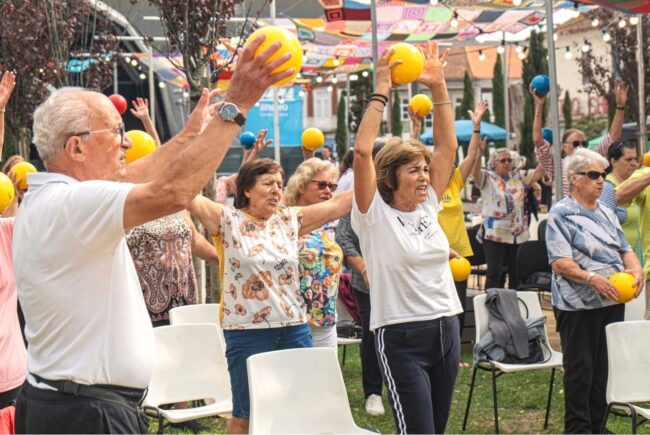
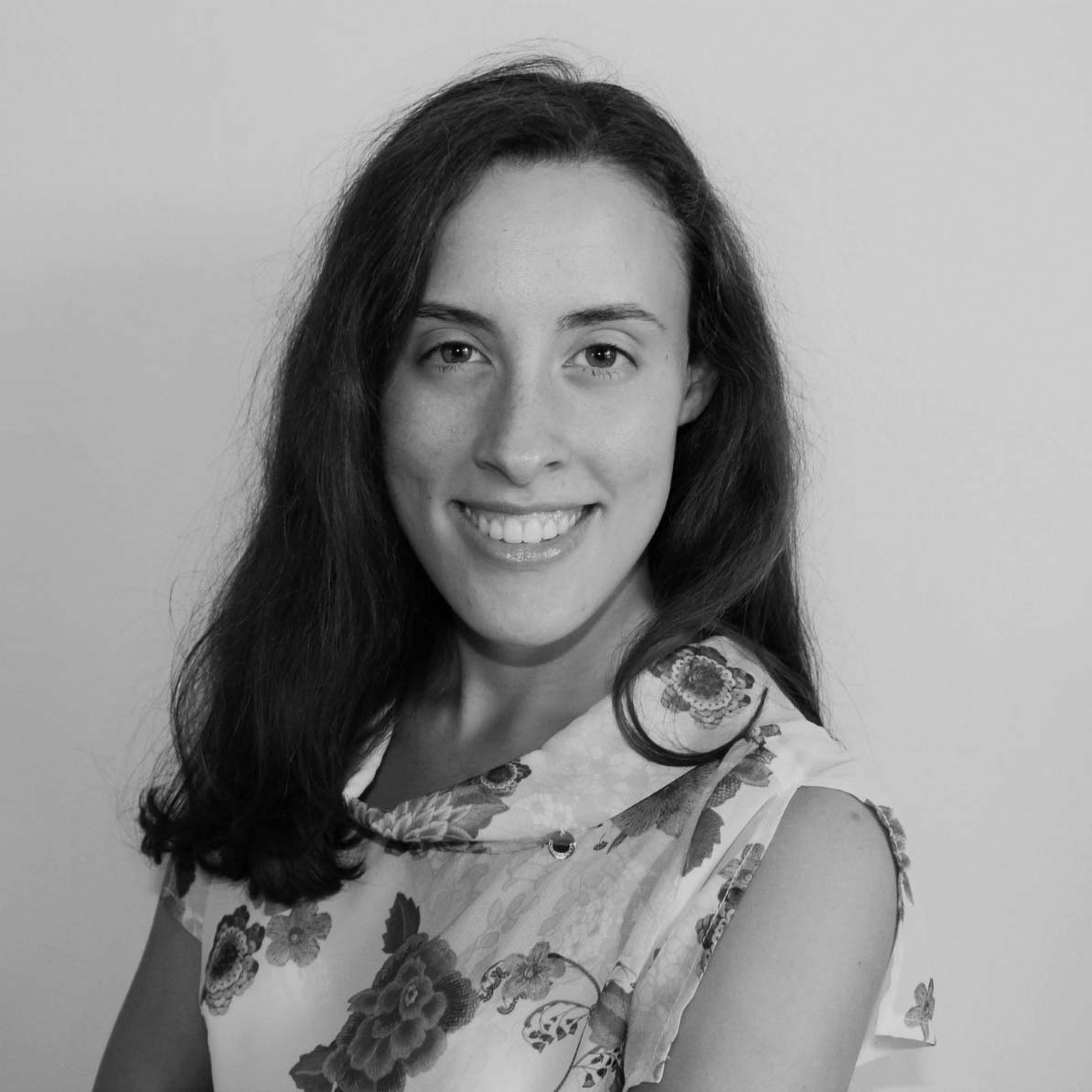
Maior Idade in Ílhavo, Portugal, is a programme dedicated to older adults, aimed at addressing social isolation. “We want to give them a voice in shaping their community, ask them what they need, and respond to those needs,” says Mónica Coelho Batista, Municipality of Ílhavo. Photo: Municipality of Ílhavo.
Maior Idade in Ílhavo, Portugal, is a programme dedicated to older adults, aimed at addressing social isolation. “We want to give them a voice in shaping their community, ask them what they need, and respond to those needs,” says Mónica Coelho Batista, Municipality of Ílhavo. Photo: Municipality of Ílhavo.
Across three corners of Europe, a shared thread connects Italy, Portugal and Lithuania: the central role of community in lifelong learning.
Different in size, politics and economic outlook, these countries face similar challenges: from marginalisation and educational poverty to social disconnection and widening intergenerational digital divides. Yet in each case, innovative local initiatives are pointing towards the same answer: learning rooted in community.
Although in recent years it has drawn tourists and influencers, and has undergone serious gentrification, the reality of life in Naples, in southern Italy, tells a different story. Poverty, unemployment and, above all, educational disadvantage remain among the city’s most pressing challenges, often giving rise to marginalisation and social isolation, not just among young people, but also within more vulnerable groups, including older people, women and refugees.
There are many associations and charities working to tackle educational poverty in the city, but in 2020 a diverse group of citizens – from pedagogists to educators and engineers – decided to come together, listen to what the city actually needed and see what they could do to help. As a result, they founded the association Movimentiamo il Quartiere (MIQ), which means “Let’s get the neighbourhood moving”, six years ago.
The organisation has worked on various projects, focusing specifically on educational initiatives for parents and children. Last year, MIQ president Sara Gemma and her colleagues wanted to focus on a particularly marginalised group in the city that was not receiving the attention and support it needed: refugee mothers, especially women who had been trafficked and were now trying to rebuild their lives with their children in Italy. This led to the creation of MARGE, which stands for Madri in rete per l’empowerment alla genitorialità – “Mothers networking for parenting empowerment”.

Sewing and knitting activities organised by MIQ volunteers helped build practical skills and gave refugee women the chance to share their stories. Photo: MIQ.
MIQ works by listening to so-called “case managers”, who identify community needs by collaborating with local organisations. These are hybrid professionals with sociological and pedagogical expertise, as well as scientific and sometimes healthcare backgrounds; they listen to communities and analyse their needs.
“One of our main strengths is precisely our ability to build networks with local organisations in order to identify people’s needs and support projects that genuinely make a difference in their everyday lives,” says Gemma.
Through their work with local organisations, Gemma and her colleagues identified a group of migrant mothers who had been trafficked and were living in a building in Naples that had been confiscated from the mafia. The project, which began in February 2026, started with Gemma and a team of volunteers meeting these six women and asking them what kind of support they needed.
“What we found was that, in this case, traditional educational needs were secondary, because they already had access to Italian language courses, for example. However, many of these women felt isolated and wanted activities to fill their time, particularly at weekends,” Gemma explains.
One of the biggest challenges was childcare. They longed for a sense of community and activities to engage in, but could not leave their young children alone.
“So, we set up a series of activities such as yoga, knitting and photography, where their children could also come along and we had people there to look after them.”
Although the six women already lived together, “that’s not enough to create a sense of community,” Gemma says. One of the activities they shared was sewing and knitting which combined informal education with community-building.
“We started by asking them what they wanted to sew, and that became a starting point for sharing their ideas and personal stories. Many spoke about the incredibly difficult and traumatic journeys they had been through, as well as the challenges they now faced in Italy, such as not being able to help their children with homework.”
It became a moment to bond and begin processing their experiences, and having a supportive group around them “worked as a safety net, allowing them to feel secure enough to open up and find help,” Gemma adds.
Then the group started the practical work, which again helped the “refugees develop skills in a safe and supportive environment,” says Gemma, who strongly believes in the value of non-formal education.
Gemma says she did not expect the project to be so successful. “Honestly, I was expecting indifference at best, because with projects like this it’s easy for refugees to feel obliged to take part in activities that may not even be useful to them. But the fact that they opened up and trusted us made us incredibly proud. Despite the language barrier, we managed to communicate and build a strong sense of unity. Community is something that has to be built – it’s not a given.”
After a month, some of the women were preparing to leave the centre and even the city. Together, they created a patchwork blanket incorporating elements of their lives and stories, which they decided to leave behind in the centre for the next women.
“It became a kind of passing-on ritual, and we also organised a party open to the whole neighbourhood, because we wanted to reinforce that sense of openness and community,” says Gemma.
She is particularly proud of what was achieved: “We arrived in March and found conflict; we left in April with a sisterhood.” In this case, the line between educators and the migrant women became more blurred than expected. In community-based learning, the process often works both ways – “it’s generally transformative in both directions,” she says.
The project has since led to a new phase. “We decided to continue along this path and, again by working with organisations on the ground, we identified another group of women who would benefit from this kind of community-building,” Gemma explains.
That is why, in the spring, they launched a knitting course bringing together young mothers in the city who felt isolated and lonely, alongside older women and grandmothers.
“Once again, the idea is to bring these two generations together, not just to knit but to exchange stories and build a network of support, which is one of the most important and fundamental needs in the city at the moment.”
On the other side of the Mediterranean, a small municipality in Portugal also felt the need for spaces dedicated to community learning, particularly for older adults. The municipality of Ílhavo, in central Portugal on the country’s Atlantic coast, has had a project for older people since 1998.
“However, we realised that most of the provision for older adults was focused on care and support, rather than on lifelong learning and active participation in community life,” Mónica Coelho Batista, head of the Social Development and Health Division at the Municipality of Ílhavo, told us by email.
Batista and her colleagues recognised that loneliness and social isolation were major challenges for the older population and began to think about ways of creating opportunities for them to contribute to and take part in community life. So, in 2022, they opened the Laboratory of Ageing, their first municipal space dedicated exclusively to ageing and longevity.
“From English classes and digital literacy to research projects, as well as community gardens and sports and arts activities, between 50 and 100 adults have taken part in community activities.
“Our idea wasn’t just to help older adults develop skills they might lack, such as digital or language skills, but also to make them feel part of the community,” adds Batista.
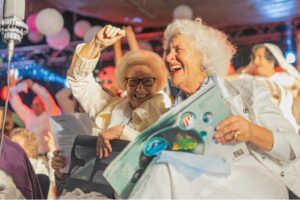
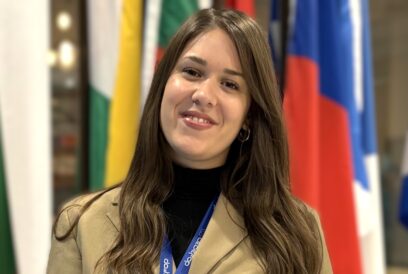
“It was difficult to make people believe in themselves and show that it’s never too late to learn something new,” says Mónica Coelho Batista. Photo: Municipality of Ílhavo.
One example is Rádio Faneca, a community festival in Ílhavo. During the event, some of the older participants spend the day making fabric bags and invite people of all ages to sit with them, learn a few stitches and join the conversation. Children, teenagers and adults would often stop by, take part and learn directly from them.
“We strongly believe in community and intergenerational learning because it helps people see one another differently,” Batista comments.
The project has not been without its challenges, particularly when it comes to the confidence of the older participants. “One of the things we found most difficult was helping people believe in themselves and showing them that it’s never too late to learn something new. Many participants join us saying things like, ‘I’m too old for that’, ‘I’ve never used a computer’ or ‘I don’t think I can learn anymore.’”
Nevertheless, Batista is proud of the project, especially because it has proved flexible and because they have focused on giving older adults a voice in shaping their community.
“Going forward, we want to maintain this openness, ask them what they need, and respond to their needs and wishes with new projects. Major Idade was never designed as a fixed solution, in fact it continues to evolve as new needs and interests emerge,” concludes Batista.
Last, but by no means least, we turn to Lithuania, a small country that has used community-based learning to tackle one of the biggest challenges facing older generations: the digital divide.
“When we started speaking to older people and organisations in Lithuania, we found that the digital gap was a serious problem,” says Agnė Buraitytė, who works at the Nordic Council of Ministers Office in Lithuania on sustainability and digitalisation initiatives.
Recent research found that in 2025, around 35% of Lithuanians aged 65 to 74 do not use the internet, “which leaves them feeling insecure and unsure about navigating online spaces and accessing many services,” she continues.
Buraitytė explains that their work showed that seniors in Lithuania often felt unsafe and even fearful when it came to using digital tools. “What people told us was that they wanted to go online, but they were worried about someone stealing their data or money,” she says. This led to the idea of a reverse mentoring initiative. In Lithuania, young people in secondary school are required to complete a number of volunteering hours in their local community, so they began helping older adults, mainly people over 60, develop their digital skills.
The project began in Lithuania in 2023, led by the association Langas į ateitį, alongside Nordic partners such as the Nordic Network for Adult Learning in Finland and IT-Guide in Sweden, as well as a range of Lithuanian stakeholders including policymakers, NGOs, libraries and school communities. By the end of the first phase, 64 organisations, 379 older adults and 217 young volunteers had taken part.
“Local organisations, and especially libraries, were particularly valuable because they provided spaces where young people and older adults could meet and carry out the mentoring activities,” says Rita Šukytė, director of the association Langas į ateitį in Lithuania.
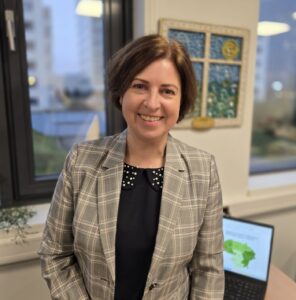
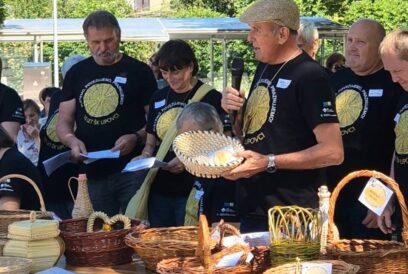
Young people have helped older adults develop their digital skills. “It became a genuine exchange of knowledge that both generations needed,” says Rita Šukytė.
The association’s role was to coordinate the project, developing guidelines to help young people learn how to mentor effectively, while also supporting various types of organisations that wanted to get involved. “The tailored approach proved very effective,” says Šukytė, as it was essential that one-to-one sessions could take into account the specific needs of older learners. This enabled volunteers to help with tasks such as setting up accounts, carrying out security checks, setting up certain functions on smartphones and finding information.
“On this last point, we really saw the power of community and intergenerational learning, because, for example, some older participants asked how to stay informed about the latest political developments and election candidates. This was also a change for younger people to learn more about democratic process in the country, so it became a genuine exchange of knowledge that both generations needed,” she says.
Šukytė explains that informal learning is not always easy to measure and this pilot project aimed to establish a foundation for a model of community learning that could be replicated in other communities and countries.
“It’s not always easy to get young people to slow down and explain digital skills that come naturally to them to people who grew up in a completely different generation,” she says. Some young participants did find it challenging to be patient enough to get their message across, but according to feedback collected by the organisers, the intergenerational exchange benefited both sides.
“Interestingly, some older adults told us that learning how to use Google Maps was one of the highlights of their experience, because it allowed them to explore new places, almost as if they were travelling, bringing back memories from their younger days,” says Buraitytė.
She adds that the Lithuanian model will now be rolled out in Finland and the Faroe Islands as a kind of blueprint that other organisations can adapt to their own local contexts. In September 2026, a second phase will also begin in Lithuania, once again shaped by the needs of the community, with a deeper focus on artificial intelligence and cybersecurity.
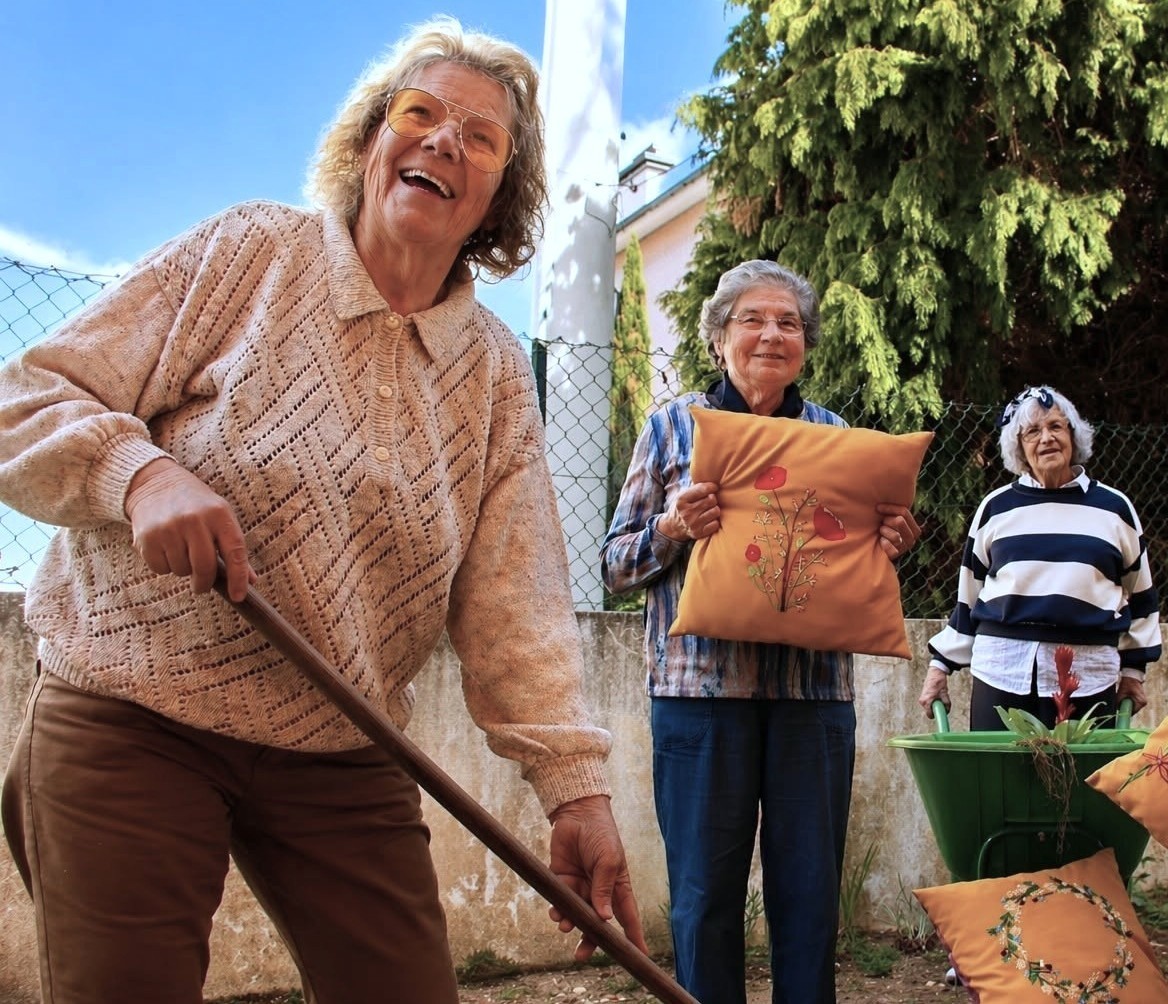
This article is part of the theme ‘Community-Based Learning 2026’.
Read related articles here