New perspectives

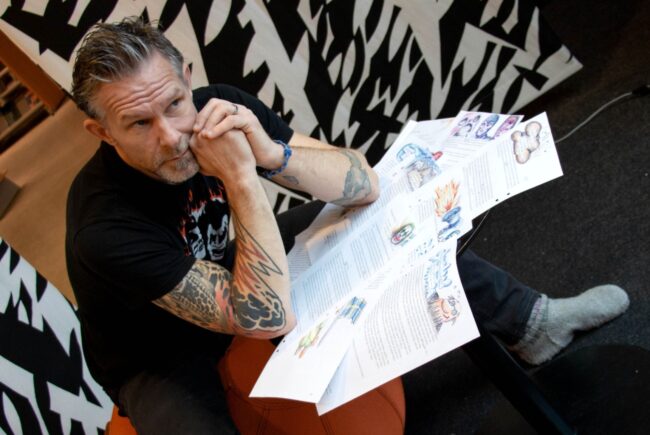
“The ecosystem of community-based learning in Sweden is extraordinarily rich, and a powerful vehicle for democracy. These spaces must be protected,” says Magnus Dahlstedt, Linköping University. Photo: Magnus Dahlstedt.
“The ecosystem of community-based learning in Sweden is extraordinarily rich, and a powerful vehicle for democracy. These spaces must be protected,” says Magnus Dahlstedt, Linköping University. Photo: Magnus Dahlstedt.
Sweden has, in recent years, experienced a surge in xenophobia and far‑right populism. “The political situation is now profoundly undemocratic,” says Magnus Dahlstedt, professor at Linköping University. For him, the only glimmer of hope lies in strengthening community-based learning.
Gone are the days of calls to “open your hearts” from Sweden’s then prime minister Fredrik Reinfeldt. In 2014, he urged the public to show patience and generosity towards refugees arriving in the country. More than a decade on, the tone could hardly be more different. In April 2026, Sweden’s prime minister, Ulf Kristersson, said he would be prepared to bring the far-right Sweden Democrats (SD) into government should his Moderate party win the September election. The prospect has caused unease and alarm among many, especially given the party’s neo-Nazi roots.
Although seen by some as troubling, the move is not entirely surprising. In the years since the so‑called refugee crisis, both political discourse and public sentiment in Sweden have hardened towards migrants. Despite global displacement reaching record levels, Sweden recorded a rise in returns to countries of origin in 2025, while the government recently highlighted figures showing the lowest number of asylum seekers since 1985.
Similarly, social tensions appear to be rising. Over the past decade, some scholars have pointed to what they describe as a “negativisation” of the Swedish press’s coverage of immigration between 2010 and 2022, contributing to the mainstreaming of more hardline and polarised views.
“What the so‑called migrant crisis has produced here is a racialisation of democracy,” argues Magnus Dahlstedt, professor of social work at Linköping University in Sweden.
He is particularly troubled by what he calls “the normalisation of repressive policies towards migrants”. In his view, since the mid-2010s, successive governments have gradually subordinated social rights to place of birth, effectively targeting those born outside the country.
The so‑called migrant crisis has produced a racialisation of democracy.
The consequences are tangible. Access to social benefits has become more difficult for migrants; even after securing citizenship, individuals may find it more precarious.
“It is easier to lose that citizenship if you are judged not to conform to a prescribed set of so‑called Swedish values,” Dahlstedt notes.
A 2023 study showed that there seems to be a perception that people with an immigrant background living in Sweden must earn access to social rights, with over 60% of respondents agreeing with the statement that people with a foreign background who commit crimes in Sweden should be deported.
“There is an inherent racism here – an outdated notion of integration that demands complete assimilation to the host nation’s norms.”
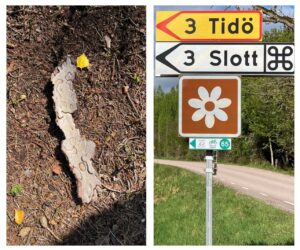
Sweden’s adult education sector is feeling the effects of the political shift to the right that began with the 2022 Tidö Agreement, negotiated by the country’s right-wing parties at Tidö Castle. Photo: Magnus Dahlstedt.
As in several other European countries, migrants have increasingly been cast as scapegoats, blamed for a wide range of social problems.
“In Sweden, migrants have been blamed for poverty, welfare cuts, crime and social tensions, among other things,” he says. “But in reality, these issues reflect political and structural failings.”
Dahlstedt has witnessed these developments first-hand. In recent years, he has travelled extensively across the country, speaking to adult educators and mapping the state of Sweden’s social fabric – research that will eventually be published in book form. While the book is still in progress, several reflections from his journey have already been published as essays in a range of Swedish online publications.
“I have seen a clear and rapid rise in socio‑economic inequality and poverty in the country.”
Although Sweden remains a high-income country with low levels of absolute poverty, inequalities in Sweden such as income inequality and relative income poverty have increased at a faster pace than the Organisation for Economic Co-operation and Development (OECD) average in the Nordic countries over the past few decades.
In his travels, Dahlstedt has also seen how institutionalised racism “inevitably has knock-on effects for adult education”. In the past few years, funding for adult education has dropped dramatically across the country, with rural areas particularly hard hit. At the same time, the professor argues, government policy has sought to centralise provision and impose a more top‑down approach, geared primarily towards labour market needs.
“Adult education is increasingly framed around predefined skills and outcomes, rather than shaped by the experiences of educators and communities on the ground.”
Institutionalised racism has knock-on effects for adult education.
For Dahlstedt, this shift is not incidental. “A free, vibrant adult education sector can pose a challenge to an undemocratic government,” he says. “Policymakers may prefer to control both the initiatives and the narrative, rather than allow a genuinely independent space to flourish.”
What is needed instead, he argues, is autonomy. “Adult education and civil society must remain free, vibrant and able to criticise those in power. These are fundamental pillars of any democratic society.”
The concerns he expresses are widely shared. During his travels, Dahlstedt has encountered educators and practitioners who worry not only about funding cuts but also about shrinking space for dissent.
“Many are particularly concerned about reductions in programmes tackling racism and xenophobia,” he says. “They feel unheard and, in some cases, afraid to speak out too forcefully against the far-right for fear of repercussions.”
Dahlstedt himself has faced threats. “But staying silent is not an option,” he adds. “Otherwise, we risk losing even more of our autonomy and agency.”
Yet amid this “darkness”, he still sees grounds for optimism. “Community-based learning, non‑formal education and popular adult education are, I believe, the most promising paths forward,” he says. “We need to listen to people’s needs, to adopt a more horizontal, bottom‑up approach to lifelong learning, rather than one driven solely by government priorities.”
“In the wake of the 2015 refugee situation, adult education was one of the forces that mobilised people across the country to support those seeking refuge in Sweden,” the professor says.
With very little time to prepare, initiatives were set up to give newly arrived migrants opportunities to socialise, learn the language and get to grips with Swedish society, often shaped by the traditions of folkbildning, or popular education, and its way of creating spaces for shared learning.
Much of the work also involved different forms of social support. Practitioners frequently faced emotionally demanding situations, particularly when participants were dealing with difficult circumstances, such as yet another rejection of their asylum application.
“The response we saw during this period shows that adult education can make a real difference, even with limited resources: something worth remembering given the serious challenges it faces today.”
However, many of these spaces are now struggling to continue offering these opportunities, Dahlstedt says. He regrets the loss of places where adults from different backgrounds can meet and learn together. “Across Sweden, we’re losing spaces that encourage interaction and mutual understanding. That is a genuine loss for society.”
From charities and food banks to local associations, trade unions, churches and libraries, adult education takes many forms in Sweden – and Dahlstedt believes these spaces must be protected.
“The ecosystem of community-based learning here is extraordinarily rich. It is a powerful vehicle for democracy, inclusion and social progress,” he says. “The challenge is that these initiatives are often fragmented and disconnected. We need to bring them together and political will is necessary to support and engage with them.”
Fragmented initiatives must be brought together.
For Dahlstedt, the path ahead is clear. “In many ways, the future of adult education already exists,” he says. “Our task is to recognise it, nurture it and ensure it can thrive.”
He ends with a stark warning for the rest of Europe. “If we fail to listen to these voices, if we deny them space, support and legitimacy and if we continue down a path of institutionalised racism, we risk an increasingly undemocratic future,” he cautions. “Sweden may yet serve as a warning of where others could be heading.”
To explore further, watch a video related to this article. In the video, Magnus Dahlstedt explains how the pedagogy of hope in popular education helps find paths out of the increasingly unequal social landscape in Sweden.
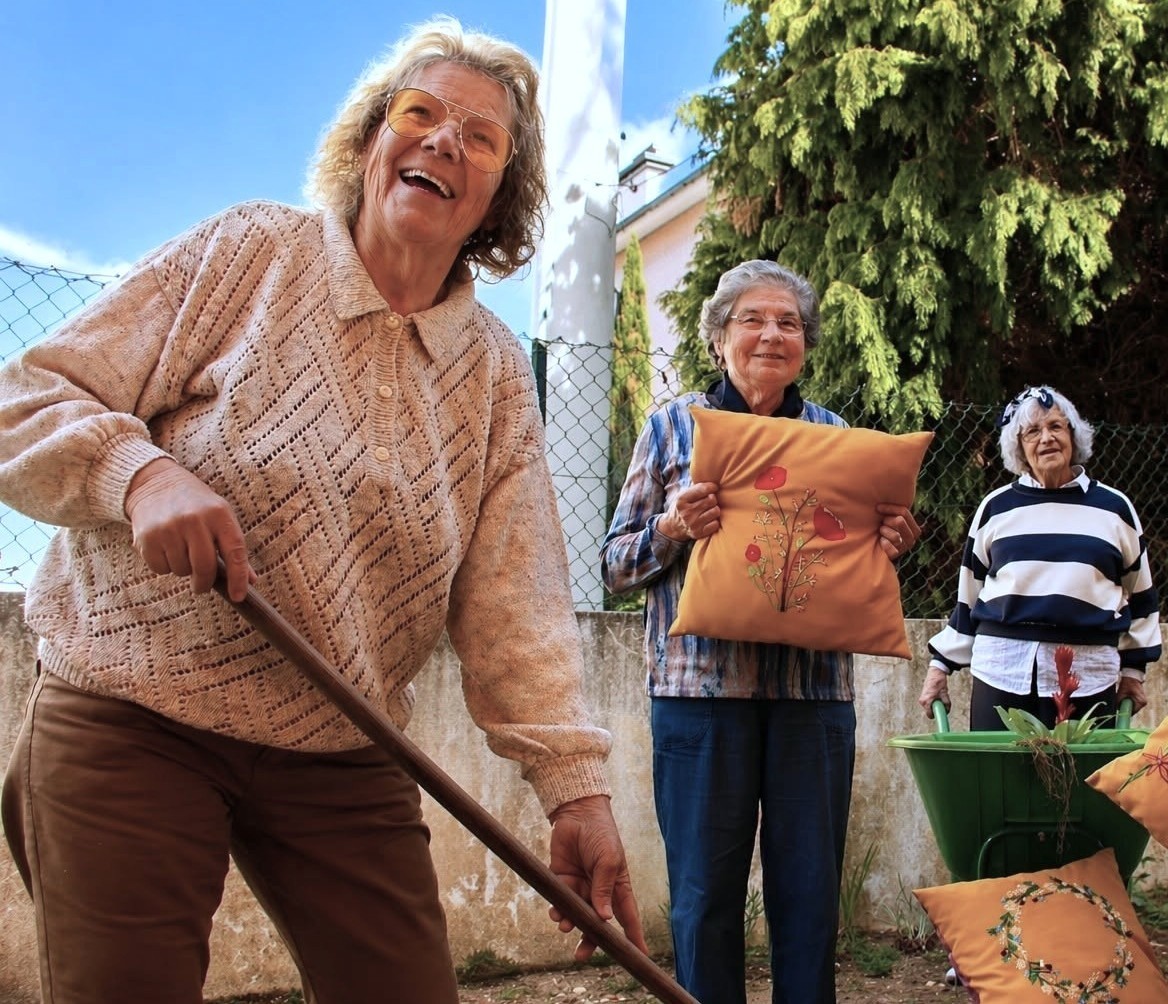
This article is part of the theme ‘Community-Based Learning 2026’.
Read related articles here