Policy perspectives

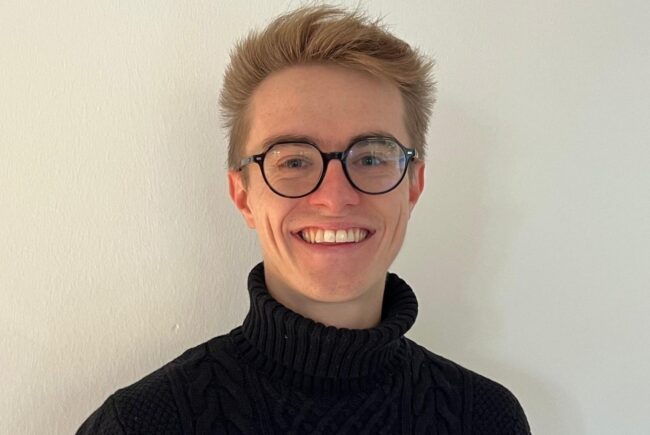
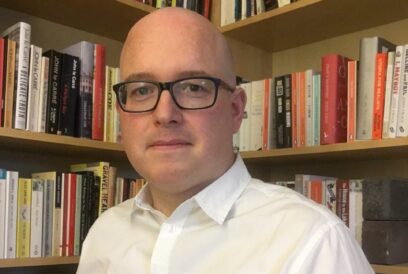
“Given the fundamental role that adult education plays in our society, it is essential to give greater visibility and recognition to those who work in this field,” says Tommaso Caraccioli, Research Fellow at the University of Würzburg.
“Given the fundamental role that adult education plays in our society, it is essential to give greater visibility and recognition to those who work in this field,” says Tommaso Caraccioli, Research Fellow at the University of Würzburg.
Our “Meet the board” series introduces the members of ELM Magazine’s editorial board. Our new member, Tommaso Caraccioli from the University of Würzburg, emphasises the value of exchanging knowledge and experiences among educators.
The ELM editorial board plays an important role in developing the magazine. The board consists of adult education experts and academics from different parts of Europe.
In this interview, we introduce our new board member, Tommaso Caraccioli, Research Fellow from the University of Würzburg in Germany.
What interests you most about adult education?
I am particularly interested in the professionalisation of the sector. Adult educators play a central role in adult education; however, in many contexts the profession itself is still insufficiently recognised, and opportunities for professional training and development remain limited.
Given the fundamental role that adult education plays in our society, it is essential to give greater visibility and recognition to those who work in this field.
One aspect of professionalisation that particularly interests me is the role that professional networks and communities of practice can play. During my experience in Georgia with DVV International, and through interviews with trainers working in adult education centres across the country, I understood the value that the exchange of information and practices has, as well as how important it is to have spaces in which educators can interact with others doing similar work.
The role of professional networks and communities is important for educators.
These professional communities represent a crucial resource, as they not only help address common challenges, but also strengthen a sense of belonging and professional identity.
What would you like to change in the world through your work?
A few years ago, during a university lecture, one of my professors said something that really resonated with me: as adult educators, our responsibility is to adopt a broader perspective, one that does not stop with those who are already included in the system but also reaches those who are excluded. Those words have guided my steps ever since.
This is what I aim to address through my work: to strengthen attention, starting with myself and then more broadly within the field, towards those who are not participating in adult education.
I aim to increase attention to those who are not participating in adult education.
Doing so requires us to consistently reflect on some key questions: Who is not participating? Who is missing from this classroom? What are the reasons for their non-participation? And what can we, individually and collectively, do to improve their participation?
These are questions that can only be addressed by reaching out to those who are excluded and opening a dialogue with them, in order to develop a shared understanding.
I believe that no change can really happen without their active involvement, as no one understands their situation better than the people directly affected.
What do you gain from being a member of ELM’s editorial board?
Being part of ELM’s editorial board is, for me, a valuable opportunity. It is an opportunity to learn from other experts in the field, to exchange perspectives, and to gain a deeper understanding of what is happening in adult education across different countries.
Above all, it allows me to contribute to increasing attention towards adult education and lifelong learning, and to strengthening the link between research and practice, something I strongly believe in.
I also look forward to supporting ELM’s work to reach and involve younger generations and to promote intergenerational dialogue.
How would you describe a recent learning experience of yours?
I recently started attending German classes, and it had been a long time since I had learned a new language. I must admit that the beginning was not easy, especially when it came to writing.
I realised that I tended to start writing immediately whatever I was thinking and wanted to express, but shortly afterwards I would find myself unable to continue because I lacked the vocabulary to complete sentences that I was making unnecessarily complex.
One day, however, during one of the lessons, the teacher encouraged me to think more carefully before starting to write, to give the text a clear structure, and to aim for simplicity. This advice not only helped me pass the exam successfully, but I believe it can also be applied in many other contexts.
What do you do on your spare time?
I really enjoy running, especially in nature or along the river. It helps me relax, disconnect from work and clear my mind.
I also really enjoy cooking, especially for friends. For them, I usually cook my favourite dish, risotto with mushrooms. It is a very traditional Italian dish, particularly in my region near Milan.