Learning & teaching

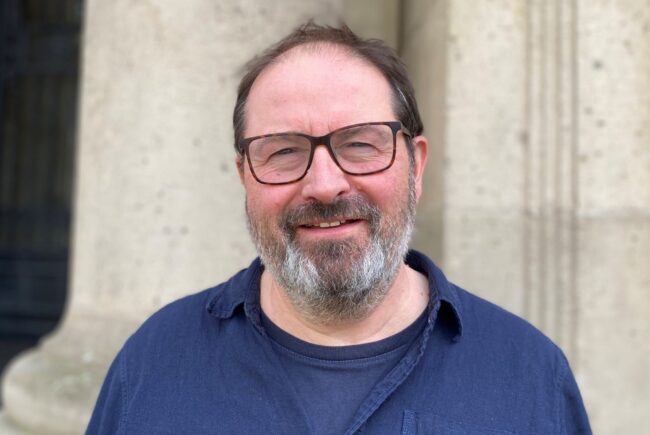
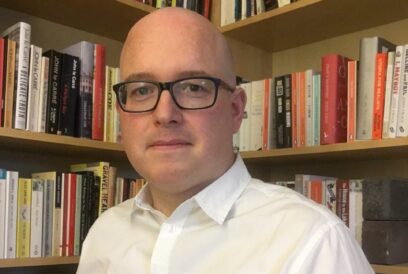
“I am always impressed by how adult learners use their education not only to improve their own lives, but also to make their communities better places to live,” says Paul Stanistreet, Head of Knowledge Management and Communications at the UNESCO Institute for Lifelong Learning. Photo: UIL.
“I am always impressed by how adult learners use their education not only to improve their own lives, but also to make their communities better places to live,” says Paul Stanistreet, Head of Knowledge Management and Communications at the UNESCO Institute for Lifelong Learning. Photo: UIL.
Our “Meet the board” series introduces the members of ELM Magazine’s editorial board. Our new member, Paul Stanistreet of the UNESCO Institute for Lifelong Learning, is inspired by the transformative power of adult education.
The ELM editorial board plays an important role in developing the magazine. The board consists of adult education experts and academics from different parts of Europe.
In this interview, we introduce our new board member, Paul Stanistreet, Head of Knowledge Management and Communications at the UNESCO Institute for Lifelong Learning, where he also serves as Executive Editor of the International Review of Education.
What interests you most about adult education?
I have seen firsthand how adult education can transform people’s lives and help people who are struggling in one way or another to find ways to improve their lives and those of their families and communities.
It always impressed me how adult students used what they had learned not only to find better work, or make a better life for their families, but also to make their communities better places in which to live.
When I first joined the field, more than two decades ago, as editor of Adults Learning, the magazine of the National Institute of Adult Continuing Education (NIACE) in the UK, I didn’t know much about adult education, but I quickly became fascinated with what, back then, we still called ‘this great movement of ours’.
I was inspired by the work of organisations such as NIACE and the Workers’ Educational Association, as well as local authority adult education services and university extra-mural departments, and recognized how their work gave people hope and enabled them to live fuller, more creative and engaged lives.
It is important that, amidst all the talk of reskilling and adaptation to changing times, we do not forget the critical role played by adult education in enabling people to shape the reality in which they find themselves and, where appropriate, resist and change it.
What would you like to change in the world through your work?
I interviewed John Harrison, the noted historian of adult education, a contemporary of people like Richard Hoggart and Raymond Williams, early on in my time at NIACE. He told me how his generation of young, radical adult educators saw the work as a way to ‘change the world without a revolution’. I thought this was a wonderful phrase and a wonderful ambition.
More modestly, in my own work, I have sought to remind people of this tradition, and to ensure that this important civic dimension of adult education is not forgotten. I think it is important that education offers adults more than the prospect of a lifetime of training, retraining and upskilling. Important though this is, it is not everything.
Education, in my view, should give people the means to reflect critically on the world around them, to understand the forces shaping their lives and communities, and to exert some influence over them.
I have never felt comfortable with the idea that what is valuable in adult education – or education more generally, for that matter – can be measured in purely economic terms, though even by this narrow utilitarian rubric it is a worthwhile investment.
I want people to understand how it can be a lifeline for people who are the furthest distance from formal education, how it can make people happier, more creative, more fulfilled, healthier, more empathetic and more connected.
In times when important democratic gains are under threat, and the political space is becoming increasingly polarized and charged with antagonism, adult education is more important than ever.
What do you gain from being a member of ELM’s editorial board?
Above all, I welcome the opportunity to contribute. I think ELM does a very important job in connecting people working in the field, and in sharing good practice and innovative thinking across borders. It is a privilege to be able to support that in any way.
Many of ELM’s upcoming themes speak to me directly, as well as being important in and of themselves. I hope I can play a useful role both in generating great content and in ensuring that the publication’s scope remains board, inclusive and relevant.
I’m particularly excited to see how I might support ELM’s efforts to share the outcomes of research and policy innovation in accessible, engaging ways.
How would you describe a recent learning experience of yours?
During the summer, I visited Stratford-upon-Avon, the birthplace of William Shakespeare, and saw a few performances of his plays. I’ve always been fascinated both by the work and the man behind them, and seeing three very different takes on his work has prompted me to dig deeper into his life and times, as well as his plays, and to think seriously about some of his themes and their relevance today.
What do you do in your spare time?
I like going to the theatre and live music. I’m lucky to live in a city (Hamburg) where we are really spoilt for choice when it comes to music. I like reading – a lot of Shakespeare, just now, but also favourite authors such as Natalie Diaz, Joy Williams and Anne Michaels.
At the moment, I am reading Hag-Seed by Margaret Atwood, which tells the story of a once-distinguished theatre director putting on a production of Shakespeare’s The Tempest for a prison adult education programme. Atwood was inspired by real-life prison education classes.