Policy perspectives

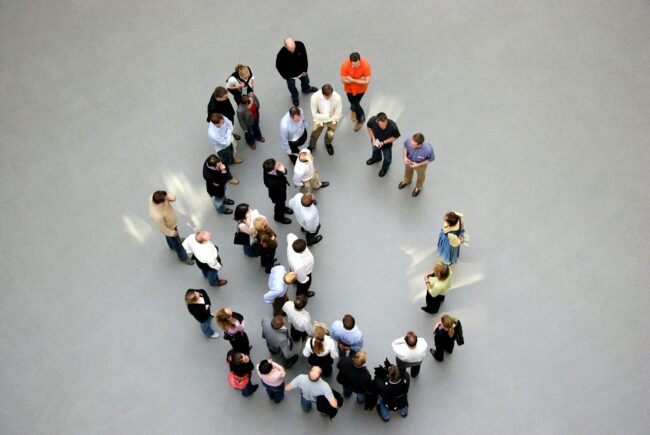
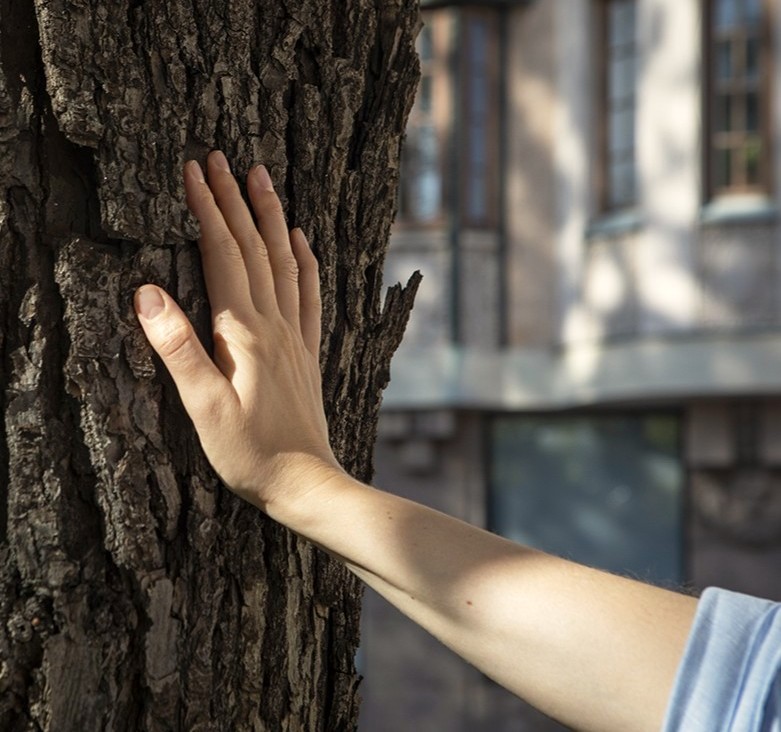
When talking about resilience, we need to shift our focus from individual coping to “a thicker concept of resilience focused on collective capacity,” writes Paul Stanistreet of the UNESCO Institute for Lifelong Learning. Photo: Ignacio Brosa on Unsplash.
When talking about resilience, we need to shift our focus from individual coping to “a thicker concept of resilience focused on collective capacity,” writes Paul Stanistreet of the UNESCO Institute for Lifelong Learning. Photo: Ignacio Brosa on Unsplash.
Current adult education policies focus on individual labour market resilience, often overlooking wider societal responsibilities. In this editorial, ELM Editorial Board member Paul Stanistreet calls for a shift towards collective resilience that supports democratic problem-solving.
Resilience has become a central idea in adult education policy in the past decades.
Automation, globalization and shifting labour markets mean people change jobs more often and need to continue to learn throughout their lives in order to remain employable. Education policies therefore have come to emphasize resilience – the ability to adapt, reskill and recover from setbacks – and to neglect some of the wider purposes of education.
The COVID-19 pandemic, financial crises and ongoing geopolitical instability have exposed how vulnerable individuals and systems are. Adult education is now expected to help people cope with these shocks – economically, socially and even psychologically.
In a way this has been positive. It has helped situate lifelong learning as a norm of policymaking. Institutions such as the Organisation for Economic Cooperation and Development (OECD) and the European Union (EU) promote lifelong learning frameworks where resilience means continuously updating skills and staying employable over decades.
SOMETHING ABOUT THIS formulation bothers me though. Policy frameworks advanced by the OECD and the EU and by national governments throughout Europe frame resilience as something individuals should build in order to be adaptable, to keep their skills up to date and to stay employable.
The problem with this is that it quietly shifts responsibility away from government and employers towards individual workers. In other words, it asks people to adapt to instability and does nothing to reduce it.
It quietly shifts responsibility away from government and employers towards individual workers.
It also ignores the structural inequalities that mean some people lack the opportunities necessary to update their skills and knowledge throughout life.
And, of course, any system that permits long-term instability and does nothing to resolve it is anything but resilient.
I WOULD LIKE THEREFORE to see our focus shift from fostering individual resilience to building resilient communities.
What would this mean for adult education?
Above all, it would mean resisting the narrow economistic lens that has been applied to adult education policy for decades and recognising that adult education has broader purposes, including democratic participation, critical thinking and personal development.
Adult education is not just about keeping your skills up to date and retraining in order to switch jobs. It should empower people to question and transform their conditions – not just adapt to them.
The current framing of resilience in terms of economic adaptability tends to de-politicise education, reducing it to coping rather than transforming, compliance rather than creativity.
When we shift our perspective from the individual to the community, though, it becomes obvious that the term has been understood and applied far too narrowly.
We need to shift our focus from fostering individual resilience to building resilient communities.
A thicker concept of resilience, focused not on individual coping but on collective capacity, could be framed in terms of democratic problem-solving, collaborative inquiry, solidarity and deliberative dialogue.
Resilience thus becomes relational rather than merely personal, while the locus of responsibility shifts from the isolated individual to democratic communities.
This to my mind is the kind of resilience communities need – the kind that enables them not only to adapt to change but also to influence and, where necessary, resist it.
Building resilience at the level of communities means renewing adult education’s traditional focus on active citizenship, creating structured spaces for civic disagreement and encouraging collaborative public problem-solving. It means restoring civic trust and building democratic capacity.
The challenges we face require capacities that extend beyond employability.
I WANT TO END WITH a reflection on resilience and hope. For decades we have been encouraging adults to adapt to changes they cannot control, as though they were necessary and inevitable, something we have no choice but to go along with. Resilience, understood in this way, undermines democratic engagement. It means more of the same.
But what if we thought about it differently? What if we understood resilience in terms of creative engagement with uncertainty, collective action and the reimagination of political life? Wouldn’t that give us hope of something better, something more than a life of endless adaptation to worsening conditions?
I think it would. And, in times like these, when democratic values are under threat and people turn to education to make sense of a precarious and increasingly violent world, this is precisely what we need.
From May to August, ELM Magazine explores the role of adult education in strengthening resilience. We examine how non-formal adult education in Swedish folk high schools contributes to societal resilience, and how learners in Ireland experience adult education as a way of strengthening both personal and collective resilience.
Follow ELM Magazine for new insights and informed perspectives.
This article is part of the theme ‘Adult Education and Resilience 2026’.
Read related articles here