
Policy perspectives
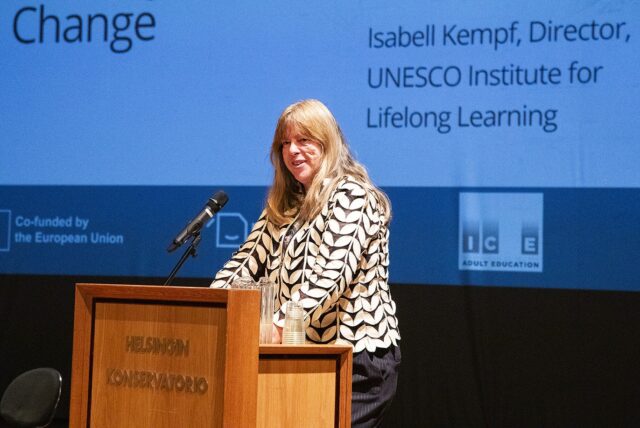
Isabell Kempf: “Adult education empowers agility in navigating global change”
“Adult education is a human right and a public good helping to create a more resilient, just and sustainable future,” said Isabell Kempf, Director of the UNESCO Institute for Lifelong Learning, in her keynote address at the EAEA conference in Helsinki.
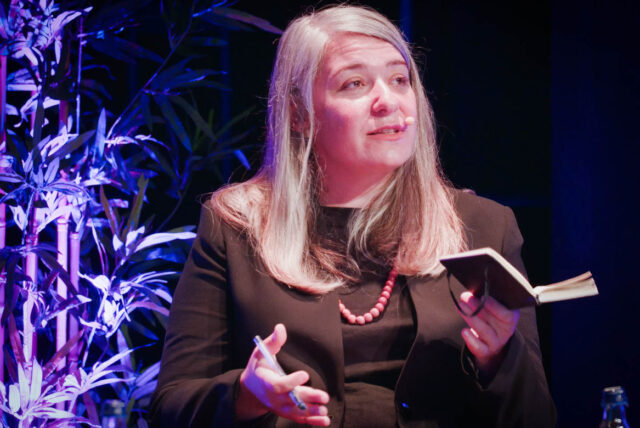
Duygu Güner: “Ignoring the hidden barriers behind low training participation is no longer an option”
In her Speakers’ Corner column, economist Duygu Güner describes the past year as being marked by an enthusiastic discussion on skills shortages and the imperative of continuous reskilling/upskilling efforts in the EU. Nevertheless, determining how to increase low training participation rates remains the main challenge. Speakers’ Corner columns are produced in cooperation with EAEA, the European Association for the Education of Adults.

Digitalisation and adult wellbeing: from social inclusion to privacy risks
Technology can work wonders. It can speed up work processes and connect people from opposite sides of the world. “All this is possible only if one knows how to use the technology,” warns Charalambos Vrasidas of CARDET.

How does the new EU AI Act affect the adult education sector?
Aiming at protecting fundamental rights and democracy in digital education, that’s for sure. What about the duties and obligations? What are they? All Digital’s Policy Officer Norman Röhner answers three quick questions about the new EU AI Act, which is expected to come into force by June 2024.

Making health literacy everyone’s business: How Ireland got adult and health literacy on the government agenda
Helen Ryan, in her column, tells how a crucial strategy by the new government played a vital role in prioritising health literacy on the national agenda in Ireland. According to her, the most successful way to promote health literacy issues among health professionals was by telling about people’s lived experience. Data and statistics were important, but it was the human stories that resonated the most.
“When I think of resistance, I think of my colleagues”
As war is uprooting lives in Ukraine, adult educators have needed to find flexible solutions to offer the right support. We talked to Oleg Smirnov, who works and lives in Kyiv.

Adult education has a key role in solving some of the biggest challenges of our time, the new EAEA manifesto states
European Association for the Education of Adults (EAEA) has renewed its adult education manifesto and hopes to convince the decision-makers about the benefits of adult education.
Glossary: Adult education policy in Europe
Do you want to be able to hold a conversation about adult education policy in Europe? Memorise the main terms, instruments and tools guiding European adult education policy from this glossary.

EAEA aims at more diversity in adult education
Targeting vulnerable groups with outreach schemes involves the danger of forming problem groups and thereby reinforcing exclusion. How will EAEA avoid this pitfall in their upcoming project?
Closing the gap between evidence-based and common practice -Workplace innovation and public policy in Europe
The Lisbon strategy largely ignored the workplace. Europe 2020 risks doing the same. At the same time, the launching of a EU-wide Workplace Innovation Network is promising. This article approaches workplace innovation from a European policy viewpoint, documenting the current innovation policy environment member states have to build upon. The authors also draw lessons for


