
digital skills

Margherita Pina: “We need conscious integration of digital tools in adult learning”
“Digital tools can transform education into an immersive, engaging and inclusive experience,” says Margherita Pina of the University of Macerata. The ELM series “Young Voices” highlights the perspectives of the next generation shaping adult education across Europe.

EAEA’s Angeliki Giannakopoulou: “We must reshape unjust systems, not merely endure them”
“In digital environments, the goal of resilience should not be to produce individuals better equipped to survive broken systems, but communities able to reshape them,” writes Angeliki Giannakopoulou in her Speakers’ Corner column, produced with the European Association for the Education of Adults.

I argue: Digital inclusion is key to democratic participation
“Digital inclusion is vital for enabling civic engagement and strengthening democracy. When citizens cannot navigate digital platforms, their ability to influence policies or shape communities is diminished,” writes Maja Brynteson of Nordregio in ELM’s “I argue” series.

I argue: Learner-centred pedagogies about AI can be intellectually oppressive
In ELM’s “I argue” series, Hugo-Henrik Hachem from Linköping University questions the emphasis on promoting critical thinking through learner-centred approaches to artificial intelligence (AI) literacy. He argues for an AI-centred pedagogy that shifts the pedagogical focus from students’ levels of thinking about AI (critical or naïve) to their attention and motivation to study AI.

EDITORIAL The stronger adult education, the stronger democracy
In her editorial on the theme of Adult Education and Democracy, ELM Editorial Board member Dina Soeiro emphasises how adult learning—through critical thinking, media literacy and civic engagement—empowers citizens to shape their communities and strengthen democracy.

Elif Bahar, OECD: “Upskilling demands flexibility, funding and motivation”
Elif Bahar from the OECD stresses the need for workers to update their skills—but how, when time, cost and access are barriers? In her Speakers’ Corner column, Bahar shares possible solutions. The column series is produced in cooperation with the European Association for the Education of Adults.

Project Stories: Empowering career advisors to combat digital exclusion
Gudrun Totland Raddatz from the Norwegian Labour and Welfare Administration discusses a competency package developed for the employees to help combat digital exclusion among residents.

Erickson: “Active participation in communities of practice helps educators navigate changes”
“Today’s adult educators must continuously reshape their professional identity,” writes Jane Erickson in her column. She considers virtual communities of practice essential for maintaining professional relevance.
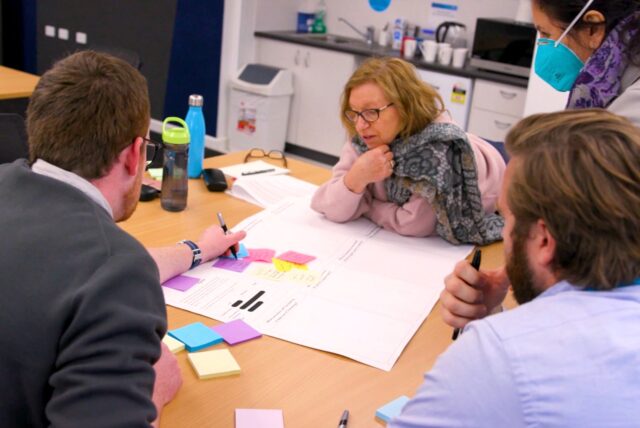
How seniors develop digital skills: A lesson from Australia
A project from the Australian research program Shaping Connections reveals the common obstacles seniors face when attempting to develop digital skills. A key to overcoming these challenges is peer-based learning.


