Policy perspectives

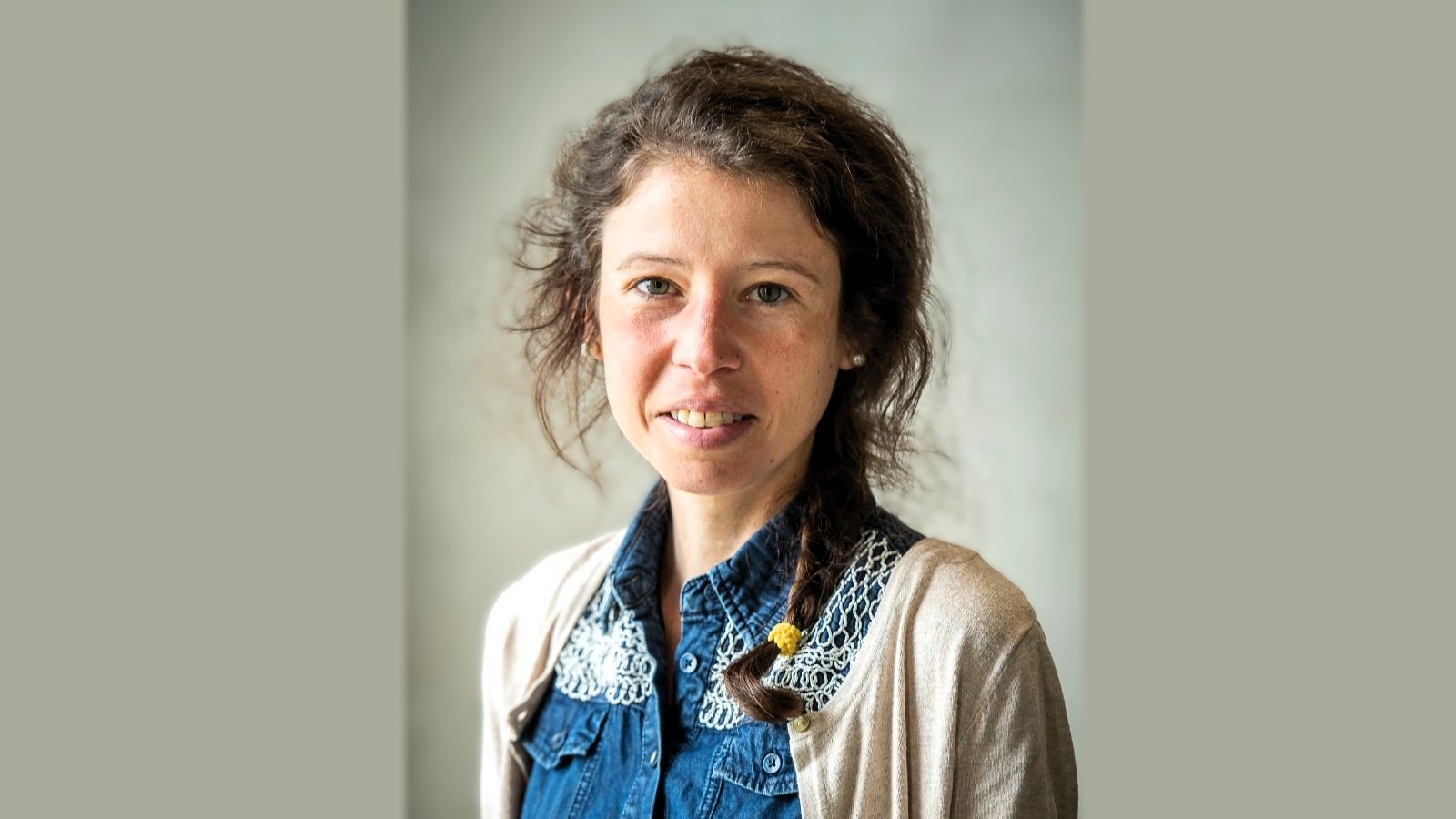
“By framing and supporting adult education too narrowly, we risk losing sight of the subtle but important crossovers between personal growth and professional development,” says Jorie Soltic, Programme Manager for Lifelong Learning at PUC - KU Leuven Continue in Belgium. Photo: Reiner Van Wonterghem.
“By framing and supporting adult education too narrowly, we risk losing sight of the subtle but important crossovers between personal growth and professional development,” says Jorie Soltic, Programme Manager for Lifelong Learning at PUC - KU Leuven Continue in Belgium. Photo: Reiner Van Wonterghem.
Flanders has raised fees for so-called “non-essential” courses. “Yet they often serve as stepping stones to career development, and short-term savings risk long-term growth,” writes Jorie Soltic of KU Leuven in her Speakers’ Corner column, produced with the European Association for the Education of Adults.
Every day in our unit dedicated to lifelong learning, I see how many diverse motivations bring adults back to education. Some pursue professional advancement; others start with curiosity or a personal interest. Yet in practice, these motives often intertwine. A learner who first joins a course in astronomy later enrols in a postgraduate programme on logistics – or vice versa.
These crossovers illustrate that personal development and professional learning are not opposites, but part of a continuum.
Personal development and professional learning are not opposites, but part of a continuum.
This is precisely why I am concerned about recent policy shifts in Flanders, Belgium. Since September 2025, the new Flemish government has tripled (!) tuition fees for courses labelled “non-essential” to the labour market. Cooking, photography, fashion, and even foreign languages such as Spanish, Italian or French fall into this category.
The result is already tangible: enrolments in these courses are declining, while resources are redirected towards vocational and integration-oriented training.
Of course, the logic is understandable. With severe labour shortages and budgetary constraints, policymakers want to prioritise job-oriented training.
But is this evidence-informed policymaking? And does it truly foster the broad learning culture that the government itself, paradoxically, endorses in its policy notes?
BEYOND THEIR INTRINSIC VALUE for personal growth and social connection, leisure-oriented courses may also serve as stepping stones to more professional forms of lifelong learning. Research suggests that such low-threshold entry points can help individuals overcome “dispositional barriers” – the lack of confidence or negative prior school experiences that keep them from further learning.
If we disregard this potential, we risk closing the door to those who most need accessible entry points into education.
Can we afford to miss the value of personal development courses?
Unfortunately, available survey data on adult learning participation offer little guidance into these dynamics such as differences in motivations across various types of courses and how leisure-oriented motivations might lead to greater engagement in job-related courses. Surveys such as The Programme for the International Assessment of Adult Competencies (PIAAC) count both job-related and leisure courses under the umbrella of adult education, without distinguishing between them.
As a result, we cannot identify differences in learners’ motivations for these two types of courses, nor how such motivations vary across groups with shorter and longer educational backgrounds.
Moreover, older studies (e.g., Boeren & Nicaise, 2009) indicate that participation motives can be mixed and diverse – often simultaneously professional, personal, and social.
INTERNATIONAL COMPARISONS add weight to the concern that complicating access to leisure-oriented courses may reduce overall adult learning participation and inclusion. The well-known “bounded agency” model of Rubenson and Desjardins (2009) highlights that participation in adult education is not only a matter of individual choice, but is strongly shaped by structural conditions.
One such condition, clearly visible in the Nordic countries, is a rich, publicly supported tradition of adult popular education: folk high schools and associations where personal, cultural and civic learning coexist alongside vocational training.
These broad offerings, grounded in the legacy of thinkers such as the Danish pastor and teacher N.F.S. Grundtvig, contribute to remarkably high participation rates in lifelong learning. While contexts differ, their experience suggests that maintaining a wide spectrum of opportunities – rather than sharply dividing “labour-oriented” and “leisure” learning – can pay off in the long run, not only culturally but also in terms of employability and inclusion.
FLANDERS RISKS MOVING in the opposite direction: narrowing access under the pressure of labour market shortages and short-term budgetary rationalisation. If we truly want to build a strong culture of lifelong learning, it may be worthwhile to explore measures such as:
In conclusion, if Flanders wants to raise its stubbornly low participation rates in lifelong learning, it should resist the temptation of short-term fixes, such as raising tuition fees for courses regarded as ‘non-essential’ for the labour market. By framing and supporting adult education too narrowly, we risk losing sight of the subtle but important crossovers between personal growth and professional development.
Observations from practice, tentative research findings and international experiences all point in the same direction: personal and professional learning are interwoven. It is time to recognise this continuum – and support it through long-term policy.
References:
Boeren, E., & Nicaise, I. (2009). Adult education: Who participates and why? In De Sociale Staat van Vlaanderen 2009 (pp. 315–333). Studiedienst van de Vlaamse Regering. https://kuleuven.limo.libis.be/discovery/fulldisplay?docid=lirias1896887&context=SearchWebhook&vid=32KUL_KUL:Lirias&lang=en&search_scope=lirias_profile&adaptor=SearchWebhook&tab=LIRIAS&query=any,contains,LIRIAS1896887&offset=0
Flemish Government. (2024). Flemish Government Agreement 2024–2029: Working together for a warm and prosperous Flanders (policy document). https://www.vlaanderen.be/publicaties/vlaams-regeerakkoord-2024-2029-samen-werken-aan-een-warm-en-welvarend-vlaanderen
Flemish Government. (2025). Concept Note: “Flanders Learns! Key Directions for a Labor Market-Oriented Training Initiative” (policy document). https://www.vlaanderen.be/vlaamse-regering/beslissingen-van-de-vlaamse-regering/conceptnota-vlaanderen-leert-krachtlijnen-voor-een-arbeidsmarktgericht-opleidingsoffensief
Rubenson, K., & Desjardins, R. (2009). The impact of welfare state regimes on barriers to participation in adult education: A bounded agency model. Adult Education Quarterly, 59(3), 187–207. https://escholarship.org/uc/item/4925z4v0