World of research


What goes into creating a good academic journal amid today’s turbulence? RELA co-editors Fergal Finnegan and António Fragoso remain cautiously optimistic despite challenges within and beyond the adult education field. Photo: Arif Riyanto on Unsplash.
What goes into creating a good academic journal amid today’s turbulence? RELA co-editors Fergal Finnegan and António Fragoso remain cautiously optimistic despite challenges within and beyond the adult education field. Photo: Arif Riyanto on Unsplash.
Amid growing pressures in academic publishing, what does it take to create an engaging and diverse journal in adult education? RELA co-editors Fergal Finnegan and António Fragoso reflect on the challenges and opportunities – and why they remain hopeful.
How has academic journal article publishing changed over the years? What challenges do journals face from AI, populism and the “corrosive cycles” of academia?
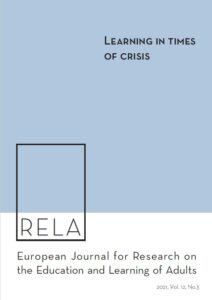
European Journal for Research on the Education and Learning of Adults
We had a lively conversation with António Fragoso (AF) and Fergal Finnegan (FF), two of the six co-editors of RELA, the European Journal for Research on the Education and Learning of Adults, based at Linköping University in Sweden.
RELA is published on behalf of the European Society for Research on the Education of Adults (ESREA). The journal appears three times a year, with each issue featuring articles around a theme as well as other open papers.
How has publishing of academic journals changed in recent years? How have these changes affected RELA?
FF: This doesn’t pertain that much to RELA that much, but we’re in a period of massive overproduction of articles in academia. The pressure to produce articles that’s placed on academics, especially in their early careers, is creating quite corrosive, unhealthy cycles of activity within universities and publishing. This has implications for every journal in the field, and for the field in general.
The pressure to produce articles is creating corrosive, unhealthy cycles of activity.
AF: There are authors who just fire away and send articles to whatever journal moves. This is evident at RELA if you look at the statistics. We have a lot of desk rejections. That means editors reject lots of articles in the first screening, sometimes because they are just out of scope.
On the other hand, when we decide that certain articles deserve to go into the reviewing process, then we really try to work with the authors, and a high percentage of those are published.
FF: I don’t think there’s overproduction of research on adult learning and education, not by any means. It’s a relatively small community of practitioners and scholars. But more generally we’re seeing a flow of half-baked, repetitive or irrelevant research pieces created by the pressures of a marketised academic system.
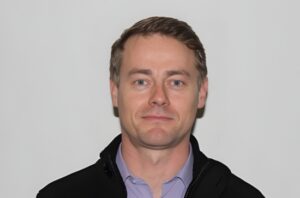
“We’re seeing a flow of irrelevant research pieces created by the pressures of a marketised academic system. Editors have to look after the community by gatekeeping a bit and keeping the scope and purpose of the journal firmly in mind,” says Fergal Finnegan from Maynooth University, Ireland. Photo: Maynooth University.
In a sense, editors have to look after the community and its research interests by gatekeeping a bit and keeping the scope and the purpose of the journal firmly in mind.
It is often said that academic journals reflect global trends and developments in adult education. What kinds of topics has RELA covered over the years? For example, how have issues such as climate change, social equity, populism, digital transformation and AI been reflected in your content?
AF: We’ve done a couple of thematic issues on digitalisation, the new normal. Social equity and equality are spread throughout our issues. We’ve published issues that touch on populism but in a very lateral way, like impact on educational policy. The issues on radical popular education have included some reflections on populism.
FF: We have also touched on the climate crisis a bit, usually in connection to sustainability. This is one of the areas where adult education is behind a lot of other educational research.
But I think there’s been a shift. The sense that we are encountering crisis after crisis has sharpened interest in questions of sustainability and in the climate crisis.
Encountering crisis after crisis has sharpened interest in questions of sustainability.
AF: Looking back at the thematic issues we’ve published since 2010, we’ve covered lots of topics that can be aggregated into three macro-topics. The first concerns social justice, inclusion and migration, which are entwined. The second is politics and power, and the third is very important in our community: transformative and radical education.
In general, we follow the concerns of the academic community. We need to have a grasp of what people are researching, the tendencies in the field, as well as broader societal changes.
FF: RELA is a relatively young journal, only 16 years old. There’s a strong interest in making sense of our field reflexively and trying to hold onto its diversity. That reflects ESREA’s core values, and it primarily focused on European adult learning and education. There is a decent balance of gender, age and nationalities in our editorial group, and a good share of diversity in what we publish.
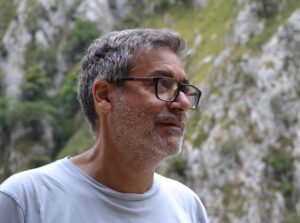
“If you look at research and policy, there are frequent links. But I don’t think most journals can immediately influence public policies. Of course we feed on practise; theory and practise are indissociable,” says António Fragoso from the University of Algarve in Faro, Portugal. Photo: Ana Almeida.
If you look over what we’ve published, you can see how the articles relate to wider debates over what adult education is and should do. There is a widespread commitment in the field to empowerment and inclusion and a keen sense of the threats to these values.
So there’s quite a lot of articles about policy changes, neo-liberalisation and instrumentalisation, as well as what is it to do research that is inclusive and oriented to social justice.
Given that academic articles reflect global trends and developments in adult education, how topical can they be?
FF: There’s a necessary time lag with good academic research. That means if you’re dealing with something extremely topical, you typically don’t get really good articles on it until one, two or three years later.
If you’re dealing with something topical, you don’t get good articles on it until some years later.
For example, there was an avalanche of atrocious submissions to the various journals I am involved in about Covid soon after the pandemic.
Now there’s a lot of talk about AI at conferences and events, but what do we actually know? To understand how machine learning affects learning and changes our conception of adult education requires a lot of careful thinking and research.
AF: About AI, I think most journals and editors are really concerned about the threat to the journals themselves and how should we deal with, for instance, the new sources of ‘perfect plagiarism’. I don’t think that is dangerous today, but it will be as AI develops.
Do you think AI is playing a role in the flood of submissions that are out of scope or mediocre quality? Is that what part of why or how people are overproducing things that aren’t relevant or up to snuff?
AF: The writing in the papers has improved a lot. The dominance of native English speakers published in scientific journals is at least superficially being a bit faded by AI, because of this wonderful software that can make writing in English easier.
But that’s just the surface. For people like me who are not English natives, the problem is not really how to write – it’s how to translate things that have a particular meaning in my language. I do research in Portugal with meanings that are closely associated to the language, and translating this is sometimes problematic.
FF: I think AI is only one aspect of this. We need to bear in mind the expansion of higher education, the precaritisation of academic labour, the remarkable rise of output-based assessment and the general instrumentalisation of education.
How have global crises affected RELA and other journals?
AF: The issues of populism and the far right will surely impact the adult education publishing field and research in unpredictable ways. They’re changing the perceptions of entire communities. Politicians from the far right are influencing the public discourse and changing policy very rapidly.
As editors, it’s difficult to know how to react. Research is not particularly fast in reacting to this.
Do RELA and other journals have a role in building bridges between research practise and policy?
FF: RELA as such is not there to produce policy advice. However, sometimes researchers do a piece and then go on to offer policy advice or do advocacy work.
There are certain networks within ESREA who publish in RELA, such as the Policy Studies in Adult Education network, who take what’s learned through in-depth research and work through it and discuss it with stakeholders including the European Association for the Education of Adults (EAEA) and people from the International Council for Adult Education (ICAE), and so forth, but it doesn’t directly inform practice or policy.
AF: If you look at research and policy, there are common, frequent links. But I don’t think that most journals can immediately influence public policies. Of course we feed on practise; theory and practise are indissociable.
FF: There are national journals, for instance the Irish adult education organisation AONTAS produces a good annual journal, The Adult Leaner, which has both academic and practitioner inputs, and it’s widely read by practitioners and researchers in Ireland.
Our colleagues in Belgrade run a journal called Andragogic Studies and I believe that has that also has a varied audience. But that’s not the function of RELA. If you try to do everything, you won’t do anything well.
How do you see – or how would you like to see – the field of educational journalism in general developing in the coming years? What will be the biggest challenges and strengths?
AF: I really don’t know how journals are going to evolve, but there’s one thing that really worries me. If you look at RELA, for instance, it’s only one open-access journal, but the dominance of big publisher groups still is going on with significant consequences to authors from marginal countries. There was a time when we thought that the open-access journal movement would change this game.
The dominance of big publisher groups continues, with consequences for authors from marginal countries.
It’s a crazy game. Private publishers have free labour in all the universities of the world, as we are editors and reviewers for their journals. Their investments in terms of electronic communication are minimal. And then they sell the products that we help produce back to our universities at a very high price.
These groups reacted violently against the open-access movement by creating their own open-access journals and plus inventing open-access fees, creating new costs for authors. Some of these costs are absorbed by universities, research centres or projects that try to ease the pain a bit.
But it introduces new inequalities or old inequalities. For example, if you’re at a university with no resources, how do you do this? That is important.
If you look at our journal, you pay no fees, but that’s because the Swedish Research Council kindly funds our costs, and that’s not that easy to do these days.
It’s our ethical duty to think not just about Europe, but about researchers who face heavy difficulties finding funding and resources for being published.
FF: As I said earlier, higher education has expanded enormously over two generations, and we also have the precaritisation and marketisation of higher education which is leading to overproduction or at least a lack of focus on real quality.
I think if the EU shifts towards the far right, we’ll see an extraordinary change in the way adult education is treated and instrumentalised.
There are crises inside and outside the academic system. So, what’s our strength as a research community? How should we respond? With open, free, critical inquiry.
How should we respond? With open, free, critical inquiry.
We must hold on to what’s important about scientific inquiry in the deep sense and hold onto the sense of adult education as a layered, complex community with people serving different roles.
So can a journal help with that? Sure it can. But we have to be curators of some sort, and think very carefully about different audiences, and think globally.