Policy perspectives

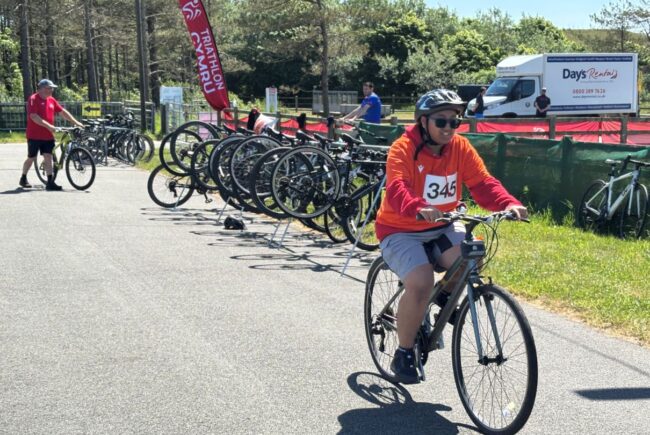
In May 2025, learners and staff from colleges across South and West Wales came together for an inclusive multisport event. Participants of all abilities had the opportunity to try new activities, build confidence and connect with peers. Photo: Colleges Wales.
In May 2025, learners and staff from colleges across South and West Wales came together for an inclusive multisport event. Participants of all abilities had the opportunity to try new activities, build confidence and connect with peers. Photo: Colleges Wales.
Wales is pioneering a fresh approach to recognising prior learning, placing learners with additional learning needs at the centre and emphasising independent living skills rather than qualifications.
Despite grappling with high levels of poverty and the challenge of meeting the needs of learners with additional learning needs (ALN), Wales has been introducing a new, non-traditional approach to recognising prior learning (RPL). This shift puts these learners at centre stage, promoting further education and focusing on independent living skills (ILS).
“Post-16 education and training need to reflect individual learner needs. This has not always been the case but we’re motoring in the right direction,” says Chris Denham, who currently leads the Additional Learning Needs Implementation programme at ColegauCymru (Colleges Wales), an education charity that represents the interests of further education providers.
With around 40 years’ experience in the sector, Denham believes that now more than ever, that recognition of prior learning must be reformed to help learners with additional needs build living skills that can enable them to lead more autonomous, fulfilling and independent lives.
With just over three million residents, Wales is home to around 670,000 people with disabilities – roughly 21% of the population (2021). This group is often among those hardest hit by one of the country’s most persistent challenges: poverty. Despite some recent progress, Wales continues to record one of the highest poverty rates in the UK.
There are 13 colleges in Wales: a small number for a small country. In 2024, 11.2% of learners – more than 52,000 pupils – were identified as having ALN or special educational needs (SEN).
“The Implementation of the Additional Learning Needs and Education Tribunal Act along with major changes to curriculum for young people who have significant learning disabilities is driving a real change to further education provision,” he says.
When it comes to discrete provision – programmes designed for learners with significant learning difficulties – the education landscape over the past 30 years has increasingly taken a qualifications-heavy approach.
“The focus of recognising prior learning has been on accumulating qualifications rather than developing real-life skills,” says Denham.
He explains that further education experts often encountered learners with extensive portfolios of certificates, but that “the evidence on the extent to which they had actually improved their skills or prepared for life beyond college was debatable”.

“The aim is to move away from repetitive, basic literacy tasks and shift the focus on elements that matter for their everyday lives,” says Chris Denham, Colleges Wales. Photo: Chris Denham.
In 2017, the education and training inspectorate for Wales, Estyn, published a report following a thematic inspection of independent living skills (ILS) provision. “Estyn’s work helped us to understand the ways in which we needed to rethink how we operate,” says Denham.
This prompted the beginning of a partnership between Welsh Government and ColegauCymru aimed at improving independent living skills and discrete provision for additional learning needs learners across the country. Since this report, colleges have made significant improvements to their curriculum offer, and this is highlighted within the latest Estyn report.
Denham has since collaborated closely with both the government and colleges to help shape the Additional Learning Needs and Education Tribunal Act and its Code of Practice. ColegauCymru has also been working closely with the sector to support significant changes to ILS curriculum.
“The aim is to continue the journey towards a more person-centred, non-accredited curriculum for learners with significant learning difficulties to prepare them for life, not just exams,” he explains.
When learners struggle with basic skills such as literacy and numeracy, sticking to a rigid, qualification-driven curriculum can often be counterproductive. By contrast, more individualised, person-centred approaches tend to deliver more tangible results.
“This new approach is based on non-accredited curricula, meaning the focus isn’t just on formal qualifications,” explains Denham. While literacy, numeracy and IT skills are woven through the programme, they are not treated as standalone goals.
“The aim is to move away from repetitive, basic literacy tasks that were less relevant for older learners and shift the focus on elements that matter for their everyday lives, now and in the future,” he says.
The non-accredited curriculum is currently built around four pillars: community participation, health and wellbeing, independent living and employability.
“The key is to understand where the learner is now: what skills they already have, where they struggle and, most importantly, where they want to go,” says Denham.
The key is to understand where the learners are now – and where they want to go.
To achieve this, colleges have developed baseline assessments as part of the RPL project. “We found that the crucial element in this process is gathering information about the learner’s starting point,” he explains.
The assessment draws on three sources: previous school records to build a picture of formal skills, input from families, and from the learners themselves.
“We want to know what they can already do, where they struggle and, most importantly, what their aspirations are. Then we identify the gaps and the areas we need to work on,” says Denham.
However, he stresses that the situation in Wales is not yet consistent. Some colleges have yet to meet these standards, while others are still developing robust methods.
The next step is to improve the relevance and consistency in what the learner will work on during their time at college. These plans are known as pathways, and there are currently four main pathways in Wales. The first is designed for those with more profound and complex disabilities. In many cases, this work is carried out by organisations outside the college sector, as the focus is on finding areas of autonomy rather than full independence.
The second pathway focuses mainly on developing independence in life skills and might not lead to a work placement but could include volunteering opportunities.
The third focuses on employability, aiming to prepare learners for further training or work placements. Finally, the fourth pathway is primarily geared towards employment, often through supported internships.
In this context, accreditation is being replaced by a system called RARPA (Recognising and Recording Progress and Achievement). This quality framework is designed to maintain standards and drive continuous improvement.
“While all colleges have made progress in developing this system, Estyn have identified some inconsistencies and we recognise there is still work to do,” says Denham. “There remain examples where clarity of offer and delivery is limited. Families, for example, often struggle to understand what each college offers.”
The first priority for improving the Welsh system, Denham says, is developing a shared understanding of pathways.
“To do that, we need to rethink the concept of pathways themselves. At the moment, they’re heavily focused on disability and on labelling the learner, and I think we need to move away from that. Instead of assigning a pathway based on a diagnosis, we should start with what the learner wants to do and achieve.”
Instead of a diagnosis, start with the learner’s goals.
Learners are far more than their disabilities. The current proposal is to base the initial assessment on the learner’s goals and aspirations, rather than their condition.
To make this shift, staff need to have the skills to develop individualised programmes based on the best information available and then to deliver, review and refine as needed.
“It’s obviously much easier to deliver a standardised curriculum that works for everyone and while we have invested in staff training in the past, further support for the sector is needed in order to deliver a more personalised approach,” says Denham.
He acknowledges that creating a completely individual curriculum is not realistic, but adds that “it’s vital that staff learn how to understand learners’ needs, group them appropriately and design tailored approaches”.
Another example of a person-centred approach to meeting needs is the Neuro Tech course developed by Coleg Cambria in North-East Wales. It’s still a small-scale experiment, but it’s attracting interest from young people with autism who often struggle in mainstream provision.
“These learners often find large class sizes and interpersonal demands challenging, yet placing them in ILS schemes would be inappropriate,” explains Denham.
“In this case, they work in smaller groups to develop specific IT skills that prepare them for the workplace, while also learning essential social skills.” Sometimes, in order to thrive, learners simply need small adjustments that mainstream education cannot provide.
Denham has also been working with the further education sector on inclusive practice with a project to train mainstream staff in inclusive teaching skills.
“The more inclusive teaching staff are, the better the outcomes for learners, and research across Europe backs this up,” he says. Still, he admits it’s no easy task: teachers and staff often come from very diverse backgrounds, making this a significant challenge.
The more inclusive teaching staff are, the better the outcomes for learners.
Denham argues that in Wales – and across many European countries – a key focus must remain on the concept of “stretch and challenge”. This refers to the tendency among some learning providers not to push learners with additional needs towards more demanding tasks, instead focusing on basic skills and repetition.
Over the past decades, charities and disability organisations have lobbied for ALN learners to be challenged more in order to drive progress.
“Repetition and basic skills are often important, but we need to make sure we don’t reduce the challenge too much, or learners will miss out,” says Denham. “It’s vital that we expect the best from them.”
Colleges across Wales recognise that the picture remains uneven. Not all colleges manage to strike the right balance between aligning the curriculum with learners’ aspirations and avoiding unnecessary repetition, but work is underway.
“There can still be a tendency to teach what some learners already know,” Denham explains. This is why the baseline assessment is so crucial to ensure that “we’re designing a curriculum that moves them forward”.
Collaboration among colleges is essential to achieving this. “That’s a real strength in Wales: colleges do tend to work together, which makes things more efficient and helps staff feel more confident in what they do,” says Denham.