Policy perspectives

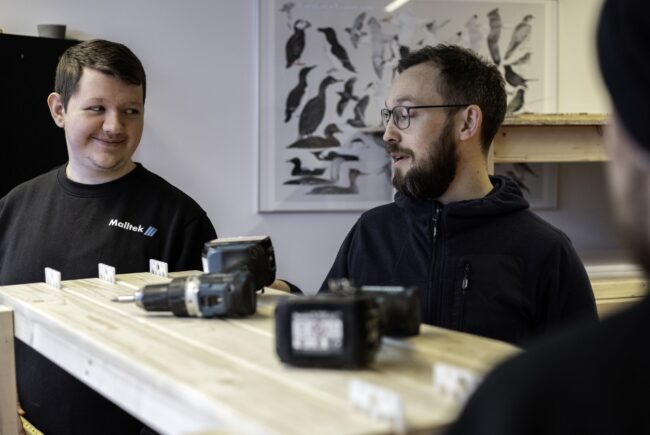
The Serbreyt project has an ambitious goal: instead of requiring learners to adapt to a school system that does not consider their special needs, it focuses on the individual. Photo: TSK Technical School.
The Serbreyt project has an ambitious goal: instead of requiring learners to adapt to a school system that does not consider their special needs, it focuses on the individual. Photo: TSK Technical School.
The Faroese project Serbreyt invests in the education of young people with special needs. The key is identifying the strengths of the learners and building on them.
Over the past two decades, increasing attention has been given to inclusive education and the development of programmes to support learners with disabilities and special needs. However, young adults with disabilities are still marginalised and excluded from formal education and, consequently, from the workplace. Europe is no exception.
A 2024 report by the European Parliament has shed light on how people with disabilities still face significant barriers to accessing education and employment as well as healthcare, sport and culture. In 2022, just over 22% of 18–24-year-olds with activity limitation within the European Union were early leavers from education and training, compared with 8.4% of their peers without activity limitation. At the EU level, the disability employment gap, i.e., the difference in employment rates between people with disabilities and the rest of the workforce, still stood at 21.5% in 2023 (Eurostat).
This is one of the reasons why the European Commission has been focusing on promoting flexible learning conditions to enhance inclusivity and adopted a recommendation for micro-credentials for lifelong learning and employability in 2022.
The idea behind micro-credentials is that, by offering short-term and more accessible courses, adult learners would not only be more incentivised to stay in education and avoid dropping out, but also that people who have traditionally been excluded from formal learning environments could more easily access education.
However, some scholars and experts, such as Italian professor Paolo Federighi in an interview with ELM Magazine, have pointed out that Southern European countries are still a long way from properly integrating these groups into adult education.
A possible inspiration could come from the remote Faroe Islands. With a population of just over 53,000 people, the autonomous territory of Denmark doesn’t often make the headlines. However, when it comes to adult education, one remarkable project stands out: Serbreyt.
“The Faroese word ‘serbreyt’ literally translates into ‘special educational path’. Serbreyt project aims at giving young people who struggle to meet the traditional requirements of upper secondary school an opportunity for an independent and fulfilling life through micro-credentials,” says Maiken Skarðenni, who started the project in 2016 at a technical college in Klaksvík, the second-largest town in the archipelago.

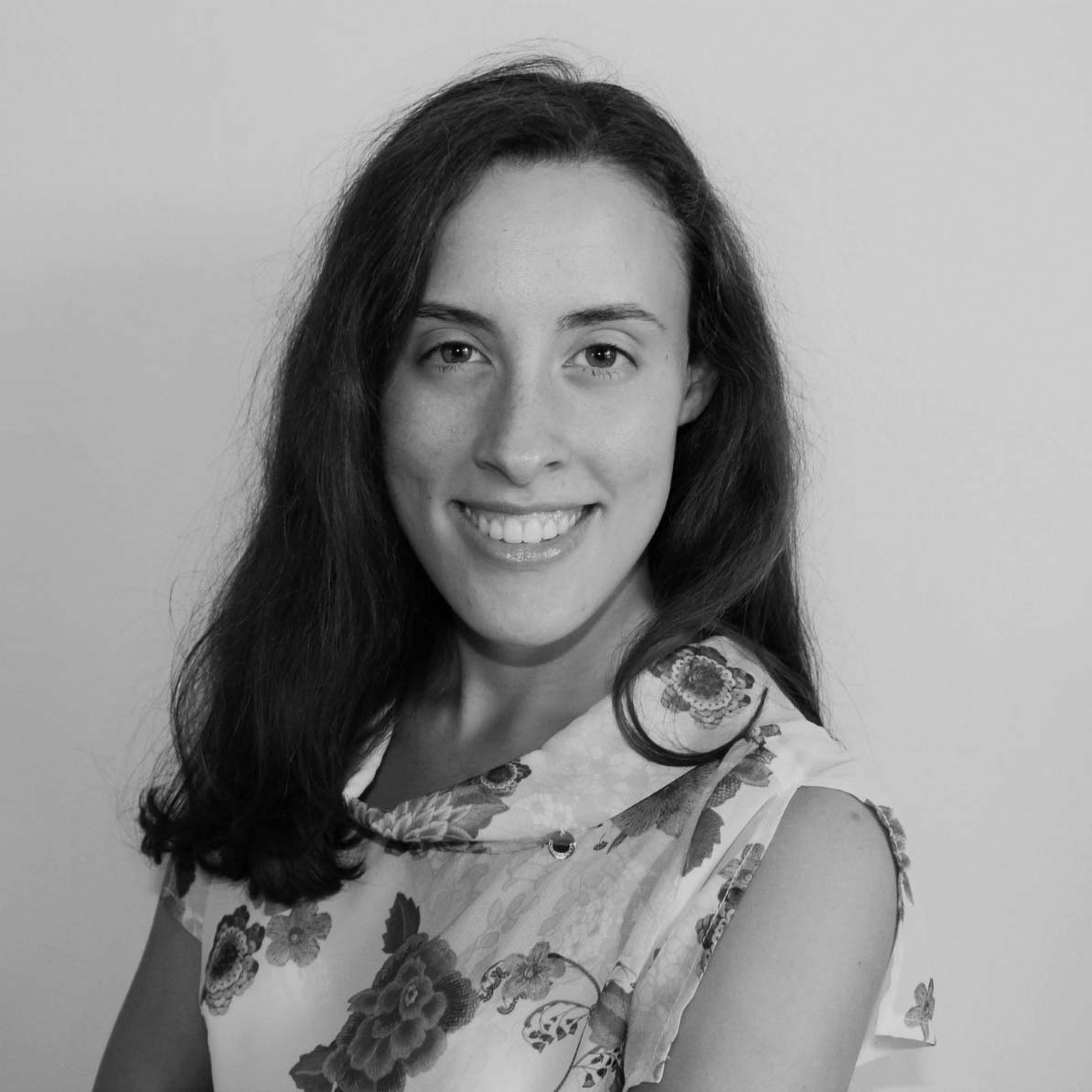
“We build on their strengths. We try to find an educational pathway that aligns with their interests,” says Maiken Skarðenni. Photo: TSK Technical School.
“I have worked as a career guidance counsellor for years and I have often met young adults with special needs who really struggled to see their potential and had incredibly low self-esteem. The reason for this is that they had spent their lives in an educational system that merely focused on what they were lacking,” says Skarðenni.
She goes on to explain that many of the young people she tutored found it difficult to either complete their education or find a job, because they were unable to identify their strengths.
“That’s how we realised that the school system was too rigid and needed to be adapted,” she says.
Therefore, Serbreyt was created in 2015 as an integral part of the Faroe Islands secondary school system, with an innovative, ambitious goal.
“We wanted to change the mindset and the language: instead of having learners adapt to a school system that’s not tailored to them and does not take into consideration their special needs, we focused on the individual,” explains Skarðenni.
Instead of having learners adapt to a school system, we focused on the individual.
The individual is indeed at the heart of the project, since Serbreyt is based on personalised education, whereby each student has an introductory talk with the coordinators, teachers and pedagogues involved in the project to really get to know them as a person.
“We want to identify their strengths and build on them. We don’t focus on their weaknesses; instead, we try to find the nearest developmental educational pathway that aligns with their interests, and this really makes a difference.”
As a practical example, Skarðenni talks about a young student who had difficulties socialising with people and cooperating with his classmates.
“However, one day we saw him gaming online with a headset on, and he was speaking in English to other players. He was actually the one leading the conversation to solve a task in the game. We were so surprised because, in that space, he’d been clearly able to overcome his socialising difficulties,” says Skarðenni. This is why his personalised programme focused on gaming and on how to work on that strength that he clearly had. Later he was able to build on that strength during his internship.
Drafting and developing an individual personalised educational plan is one of Serbreyt’s main strengths, setting it apart from most formal educational offerings in Europe. However, the plan is not set in stone, but remains flexible.

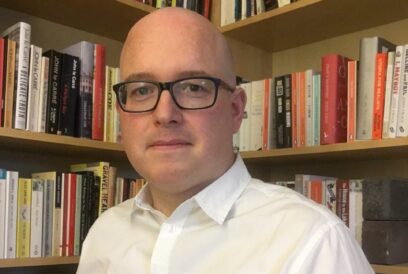
“The students have made progress just by being able to socialise with people like them. Many have spent years in schools where they have always been the last,” says Arnfinnur Nesá. Photo: TSK Technical School.
“We usually take up to a year to finalise the educational programme of each individual. It’s essential that we get to know each person and work with them within the class context,” explains Arnfinnur Nesá, a coordinator and pedagogue of the Serbreyt project at the TSK school in Klaksvík.
Nesá explains why this project has become so successful. “We shifted our focus from the traditional idea of formal education to the concept of being happy to learn. We focus on the social skills that young adults need to be happy and to build on their confidence to then be able to get out of the school system and find a job and feel gratified by being part of the society,” he says.
We shifted our focus from formal education to being happy to learn.
Contributing to society’s development is a crucial part of people’s satisfaction, and this holds true for individuals with special needs as well.
“The goals that we’ve always set ourselves, since the very beginning of this programme, were to focus on three skill sets: skills to influence one’s own living conditions, skills to create a fulfilling life and skills to create a meaningful life,” continues Skarðenni, who feels very proud of the results achieved throughout the years.
“It’s incredible what confidence can do to a human being. When you stop treating young adults with special needs like learners who cannot do something or achieve certain milestones, and you start focusing on what they are good at, you’ll see that they will feel much braver and ready to either continue their educational path or go into work,” says Skarðenni.
In addition to classroom teaching, students must choose between two main subjects: cooking and handcraft. In cooking classes, students learn to follow recipes. In handcraft classes, they learn to work with wood, electricity and other maintenance tasks. They also gain experience using various tools and understanding safety procedures.

In addition to classroom teaching, students choose between two main subjects: cooking and handcraft. In cooking classes, they learn how to prepare and serve dishes. Photo: TSK Technical School.
“We place a strong emphasis on teaching students how to work — for example, what is expected of them in the workplace and what their rights are as workers,” Nesá says.
As part of the Serbreyt project, all students do an internship, which often also translates into a job offer.
“We use the Open College Network (OCN) method, so you can consider this project as an example of how micro-credentials can be used to get a diploma that learners will be able to use for work. However, in some cases students have gone on to take further courses, sometimes at vocational or high schools,” explains Skarðenni.
Nesá prefers not to solely focus on exceptional cases of young adults who have managed to do extraordinary things. Rather, he believes ordinary achievements are just as important and worthy of celebration.
“A few years ago, we met a young student with autism who had just finished primary school but did not take the final exams because the head teacher did not want to pressure him. Once we got to know him, we found out that he had a passion for cooking and wanted to become a chef. We do have a cooking course and although it took him a bit longer to complete it, he managed. We thought he was going to find a job as a sous-chef, but once he finished the four years with us, he managed to move to Denmark and continue his education to become a head chef,” he says.
Giving young people with special needs the tools to succeed in their professional and educational life is not beneficial only for them and their families, but for society as a whole.
“A society that invests in people with disabilities or special needs has fewer people who need constant help and support and has more young adults in employment. Therefore, it has the chance to become a more productive society,” continues Skarðenni.
Providing the tools to succeed is beneficial for them, their families and the society.
The latest numbers confirm this trend. “Out of 20 students who finished the Serbreyt programme in 2023, 15 are in employment,” says Nesá.
Seeing the positive results, the project has become more and more successful and popular over the past ten years.
“This has resulted in a growing number of parents of young people with special needs applying for Serbreyt. Unfortunately, our capacity is limited,” says Nesá.
The course in Klaksvík currently only has one room available and a capacity of 12 students, but the applications keep coming in.
“There are only five members on our staff, so we cannot take on more students. This means that there needs to be a selection process,” says Nesá.
“Funding for projects is always a pressing matter. We are extremely lucky to receive state funding. Our students are able to benefit from free public transport and reach our schools even if they live in remote areas. It’s clear that there is a strong demand for this sort of projects, and we should definitely keep investing in it,” says Skarðenni.
Nesá agrees but thinks that there is also always room for improvement.
“We only have 28 hours of classes per week, which means that our students finish at 1pm, and for the rest of the day then can’t do much else,” he says.
This is because people with disabilities or special needs often receive state benefits and therefore cannot take on a part-time job during their education.
“We should offer after-school activities for them and opportunities for social networking, as we have seen that the social aspect of life is essential for them. One of the main benefits I’ve noticed in this project is that the students have made much progress just by being in an environment where they can genuinely socialise with people like them. Many of them have spent years in a school system where they have always been the last. Now they’ve found people they can connect with,” says Nesá.
“At the end of the day, this is exactly what Serbreyt is about: focusing on basic subjects such as reading, writing or maths is important, but the real focus is helping students with their social skills. Although students can be at very different levels because of their age difference – which is sometimes a challenge for teachers – making sure they collaborate with their classmates is essential to help them grow into citizens and workers,” concludes Skarðenni.

This article is part of the theme 'Flexible Learning Approaches 2025'.
Read related articles here