New perspectives

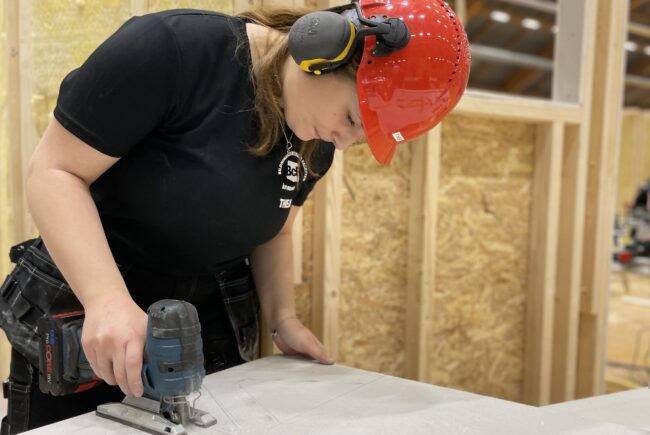
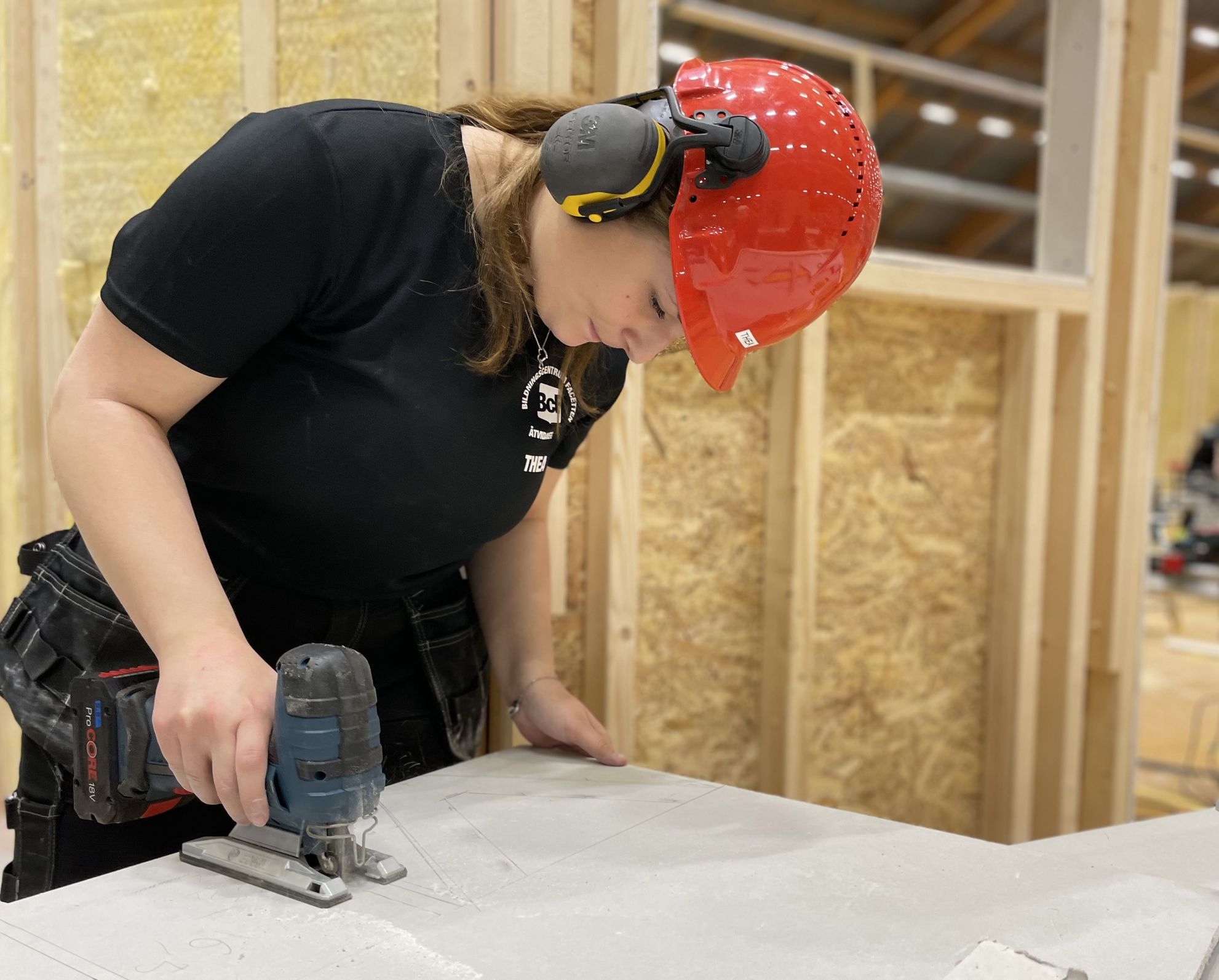
Since 2017, more than 23,000 people in Sweden have earned non-formal qualifications through the SeQF. The most popular qualifications have been in the carpentry, cleaning and military sectors. Photo: Maja Geffen/MYH.
Since 2017, more than 23,000 people in Sweden have earned non-formal qualifications through the SeQF. The most popular qualifications have been in the carpentry, cleaning and military sectors. Photo: Maja Geffen/MYH.
Over the past decade, the Swedish Qualifications Framework for Lifelong Learning has enabled thousands to earn non-formal qualifications in fields from forestry to hairdressing. Trustworthiness is built into the system, explains Anna Kahlson of the National Agency for Higher Vocational Education.
Time to celebrate! In November 2025, a conference in Stockholm saluted the 10th anniversary of the Swedish Qualifications Framework for Lifelong Learning (SeQF).
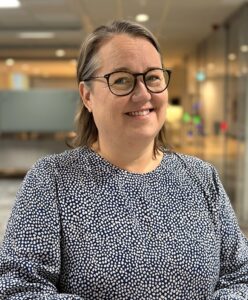
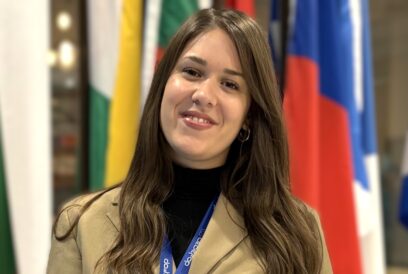
Sweden is currently focused on national qualifications to meet its labour market needs. “The main focus is the skill supply system,” Anna Kahlson says. Photo: Maja Geffen/MYH
Among the speakers was Anna Kahlson of the National Agency for Higher Vocational Education (MYH), who has helped shape the framework from its early stages in 2009.
The SeQF is part of the broader European Qualifications Framework for Lifelong Learning (EQF). It offers a transparent Swedish approach to giving people recognition for skills accrued through life experiences, alongside more traditional education.
“The Swedish framework is open and inclusive. It’s a way of recognising that people can develop skills and learn in different types of contexts,” says Kahlson. “It’s about giving skill and learning a value that’s worth something for individuals. When you see people actually getting their diploma or certificate, they’re proud of that. For me, that’s the best experience.”
The SeQF assigns levels to qualifications from the formal education system, but also for non-formal qualifications. These may be through industry organisations, Swedish folk high schools, private education providers or the third sector, for instance.
“The main purpose is to create comparability and transparency of qualifications so that an individual can choose the right path and qualification for what they’re interested in, the type of job they want to have and so on,” explains Kahlson. “It’s a tool to help with mobility within the Swedish labour market, but also between countries.”
When people get their certificate, they’re proud of it. For me, that’s the best experience.
By late 2025, more than 23,000 people in Sweden had earned non-formal qualifications, including more than 6,300 in 2024. Since 2017, the most popular non-formal qualifications have been in the carpentry, cleaning, military, hairdressing and construction sectors.
Altogether there are 113 different non-formal qualifications, overseen by 35 organisations.
Qualifications outside the formal system may involve a degree of subjectivity – so how does Sweden ensure that they are trustworthy?
“That’s an interesting question,” replies Kahlson. “A qualification framework doesn’t really organise or classify a person’s skills. It classifies qualifications, which can be used to assess an individual’s learning. You get a receipt that you have those skills. It’s about a qualification as intended learning outcomes, a competence requirement or skill standard.”
One unique aspect to the Nordic countries, she points out, is that qualifications within various sectors are developed in a similar way to how collective agreements are reached, through collective bargaining. Employees’ and employers’ organisations in each industry get together to agree on skill standards needed for a specific profession.
“All the stakeholders sit around the same table. That’s how you ensure relevance and trust that this is what you need to work in our sector,” says Kahlson.
All the stakeholders sit around the same table. That’s how you ensure relevance and trust.
“To ensure trust, you need robust procedures and quality assurance standards, but the relevant stakeholders being involved is the most important thing.” Besides that, the National Agency for Higher Vocational Education (MYH), also carries out external quality audits.
How is trustworthiness guaranteed on the European level, though?
“When a country formally links their national qualification system to the European qualification framework, there’s a set procedure for that,” notes Kahlson. “You have to show how you fulfil those criteria so that your connection to the EQF can be approved. That’s done in a peer-review way, where all the countries are involved.”
In her view, “countries can trust qualifications from other countries because everybody goes through the same process”.
She emphasises that Sweden is focused on its national qualifications, aimed at its own labour market.
“The main focus right now is the skill supply system – and the skills shortages that we have all over Europe. But the free movement of people for studies and work within Europe is of course an important factor when setting up these systems,” she says. Meanwhile, an open, inclusive national qualification framework (NQF) dovetails with the growing importance of micro-credentials across the continent.
Looking back over a decade and a half of planning and active implementation, Kahlson recalls challenges and triumphs.
“You need to be patient. You need to keep working even if it sometimes feels very slow. It takes time to raise public awareness and for people to understand these systems.”
Sometimes, she says, it can be frustrating if people have inappropriate expectations about the systems.
“For example, this is not about creating regulated professions,” she stresses. “And when you have a system that’s very open and inclusive, that makes it more complex. Because if, let’s say, you have your school leaving diploma from upper secondary school, that’s a formal qualification at level 4. That gives you certain rights, like access to university-level studies.”
“Or you could have a level 4 non-formal qualification, perhaps from an industry organisation or a private education provider – but that isn’t equal to the formal qualification, even if it’s at the same level. It doesn’t grant you the same rights. These things are sometimes hard to explain.”
Giving value and recognition to people for what they’ve learned is an empowering process.
Seeing the framework come to life has been highly rewarding.
“Giving value and recognition to people for what they’ve learned is an incredibly empowering process: ‘Oh my, I got a certificate on something that I didn’t learn in school. Or maybe I wasn’t really successful in school, but I’ve learned something on the job or my private life, and now that can be made visible and given value’.”
Kahlson pauses and adds: “This might sound cheesy, but I think that’s a very strong motivator for people to actually achieve their dreams, their dream jobs or whatever. I think that’s incredibly powerful and important.”
This article is part of the theme ‘Validation and Recognition of Prior Learning 2026’.
Read related articles here