Policy perspectives


The skills validation process developed in Sweden may involve demonstrating practical skills, such as horticulture or green-area maintenance, which are assessed using clear criteria and checklists. Photo: Crystal Jo on Unsplash.
The skills validation process developed in Sweden may involve demonstrating practical skills, such as horticulture or green-area maintenance, which are assessed using clear criteria and checklists. Photo: Crystal Jo on Unsplash.
Sweden’s Folkuniversitetet has developed its own approach to the Open College Network (OCN) method, born in the UK half a century ago. It offers flexible skills validation for people who are detached from the mainstream labour market and education system.
Folkuniversitetet, an organisation offering adult education and lifelong learning in Sweden, uses an approach based on the Open College Network (OCN) method to recognise and validate skills for people with little or no job experience as well as long-term jobseekers.
“The OCN methodology is a confidence-building process that enhances the candidate’s ability to articulate and communicate their competencies,” says Ingmari Frimanson. She is Head of Liberal Adult Education at Folkuniversitetet, which is run by foundations connected to universities in Stockholm, Uppsala, Gothenburg, Lund and Umeå.
This mechanism for validating general skills is flexible and quality-assured thanks to its structured approach based on clear assessment criteria and checklists, says Chris Robertson, Folkuniversitetet’s Coordinator for Special Development and manager of its validation project. It empowers people with little job experience through having their skills recognised.

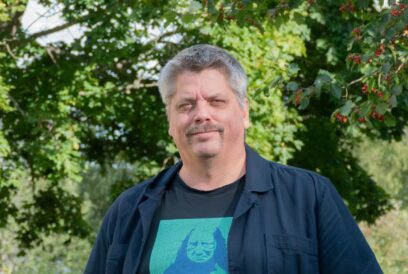
“Candidates may have their competencies formally recognised or receive documented feedback with an action plan for further development,” says Chris Robertson, Folkuniversitetet’s Coordinator for Special Development. Photo: Marina Gevoyan.
“For example, a candidate arriving from another country without formal documentation of their skills can, through this structured validation process, make their competencies visible and have them verified and documented,” she says.
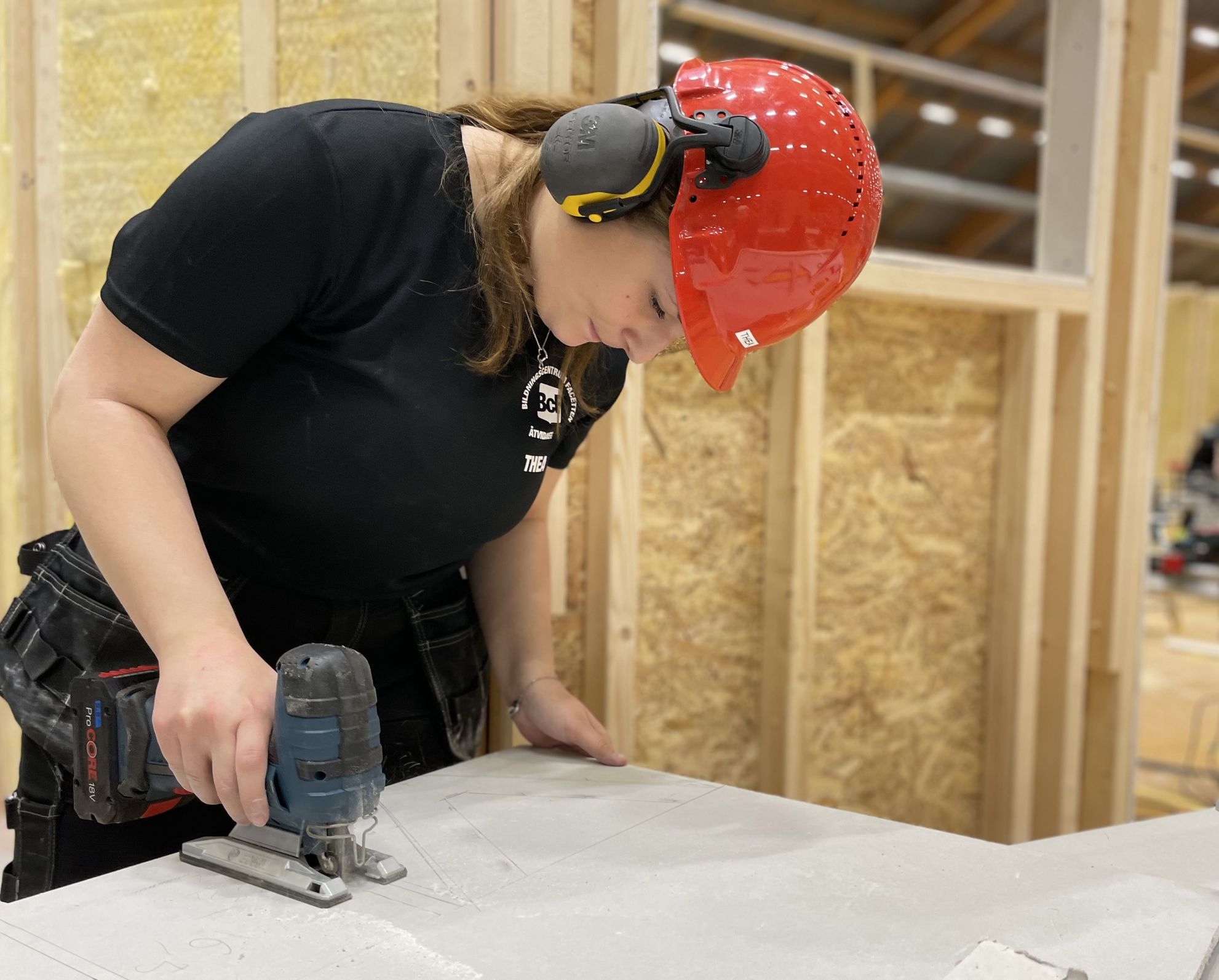
“This may involve demonstrating practical skills, such as in horticulture or green-area maintenance. These are assessed by a qualified assessor according to a competence framework,” Robertson explains.
If the candidate meets the required levels, the competencies can be formally recognised. If not, they receive documentation of their existing competencies along with an action plan for further development.
“A participant’s prior experience is mapped against clearly defined learning outcomes, known as modules. Evidence is collected through interviews, workplace observations and portfolios, and assessed against checklists,” she adds.
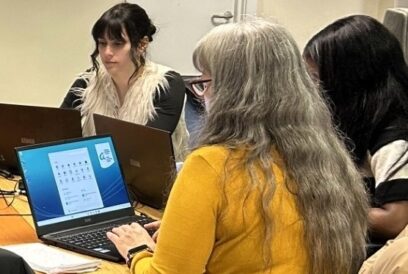
In the first stage of validation, the participant uses a digital system to answer questions about their skills and perform practical tasks. In the second stage, the applicant meets with an adviser, who assesses their skills through a series of checklists. The digital data is evaluated by internal and external stakeholders for quality assurance.
The method is designed to be flexible enough to accommodate users’ varying backgrounds and linguistic skills, for instance. The data collected may sometimes include audio or video recordings.
A certified assessor verifies the results and issues a validated certificate at the relevant level of the Swedish Qualifications Framework for Lifelong Learning (SeQF). That’s part of the broader European qualification framework, the EQF.
“Our OCN is mainly applicable to SeQF levels 1–4, corresponding up to the upper secondary diploma level, whereas other Swedish national methods are primarily focused on SeQF level 4 and above. But depending on the individual candidate’s circumstances, OCN may be suitable for all SeQF levels,” says Frimanson.
That means it has a low threshold for use, with nearly universal applicability. Validation can be crucial for self-esteem and confidence to seek work or training opportunities.
“The OCN system is aimed at anyone who needs to have their competencies validated and documented in order to enhance their prospects for self-sufficiency,” she says.
This method accommodates users from diverse backgrounds.
The method is used by various study associations, municipalities and sector organisations in Sweden. Folkuniversitetet has been using it for validation since 2015.
“The OCN methodology is primarily used by public-sector actors and providers of publicly procured services to make competencies visible and document them in a structured way,” says Robertson.
During its first decade, Folkuniversitetet’s OCN system has overcome several challenges.
“Implementing the process within an organisation is time-consuming, partly because validation as a concept is often subject to scrutiny,” says Frimanson. “At times, there have been questions about the method due to its emphasis on non-formal learning processes. However, this can be countered through the accompanying documentation, which is typically pedagogical, transparent and easily accessible.”
Robertson, meanwhile, points out that its digital tools “can be a barrier for participants with low digital literacy or limited access to digital resources”.
The Swedish model of the OCN methodology was jointly developed in the early 2000s, when Folkuniversitetet took part in a development initiative with other institutions.
“The focus areas included general labour-market competencies and communicative Swedish,” explains Frimanson.
The model includes general labour-market competencies and communicative Swedish.
Building on this collaborative work, initiatives such as the ‘Validation Through a Learning Journey’ project in the Skåne region emerged. These paved the way for Folkuniversitetet’s natural, long-standing connection to the OCN methodology.
“It’s implemented through regional organisations across the UK and Northern Ireland, which provide recognised qualifications and flexible validation of informal and non-formal learning,” explains Robertson.
In her view, it would be ideal if different national OCN systems could be aligned under one European umbrella.
“If that’s achievable, it would greatly facilitate the comparison of individuals’ competencies, regardless of their background or the contexts in which their learning has been acquired,” she suggests.
As Robertson sees it, the benefits would include improved labour market mobility, easier transfer of validated competencies across borders and greater clarity for employers.
“At the same time, it’s important to consider that national systems, regulations and labour market requirements differ,” she notes.
Ideally, different national OCN systems could be aligned under a single European umbrella.
How else could the method develop in the future?
“We must have quality-assured competence development processes in place so that employers and companies can strengthen their competitiveness,” replies Robertson. “That includes documentation that follows the learning outcomes. Validation according to the OCN model could serve as a way to quality-assure workplace-based competence development.”
“I’d like to see even more flexible, efficient and quality-assured validation methods that can quickly confirm and make learning visible with a high degree of credibility,” says Frimanson. “This is essential as the labour market increasingly demands rapid competence shifts and upskilling.”
This article is part of the theme ‘Validation and Recognition of Prior Learning 2026’.
Read related articles here