Policy perspectives

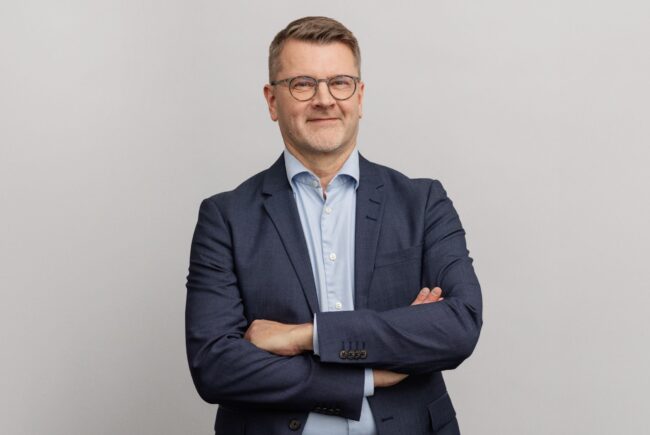
Lauri Tuomi, the new president of EAEA, sees real value in cross-border collaboration. “It’s not about exporting a model from one country to another but about learning from each other and adapting best practices to local contexts,” he says. Photo: Kvs.
Lauri Tuomi, the new president of EAEA, sees real value in cross-border collaboration. “It’s not about exporting a model from one country to another but about learning from each other and adapting best practices to local contexts,” he says. Photo: Kvs.
Lauri Tuomi, President of EAEA since June 2025, envisions a future where every adult learner can pursue lifelong learning. But how can this goal be achieved? And how can sustainable funding be secured?
In an ever-changing world, marked by geopolitical conflicts that violate the rights of the most vulnerable and growing political polarisation fuelling tension and violence across societies, how can adult education make a real difference?
We spoke with Lauri Tuomi, the newly elected President of the European Association for the Education of Adults (EAEA), to learn more about the vision behind his belief in a Europe where “every adult has the opportunity to learn.”
What motivated you to apply for the position of President of EAEA?
Applying for the presidency felt like a natural next step after serving as Vice President and being part of the Executive Board since 2019. Over the years, I’ve come to deeply value the work of EAEA, and I’m truly honoured to have the opportunity to represent the organisation at this level.
When I was invited to put my name forward, I was especially motivated by the chance to collaborate not only with colleagues within the association but also with partners from other umbrella organisations across Europe, as well as adult educators around the world. Working alongside such passionate and inspiring people is incredibly energising.
One of the greatest rewards of this role is the collaboration it fosters. I’m particularly excited about the potential we have to build a more innovative, competitive and resilient society through adult learning.
I’m excited about the potential we have to build a more resilient society through adult learning.
EAEA supports over 60 million adults across Europe, which means our work has the power to make a real and lasting impact. If there’s one thing I’m especially passionate about, it’s ensuring that every adult learner in Europe has both the means and the opportunity to continue learning throughout life.
That is a very ambitious goal that has been pursued over the past years. So, what will change under your presidency?
The work done by my predecessor, Uwe Gartenschlaeger, has been outstanding, and I fully intend to build on the strong foundation he’s laid. So, in that sense, I’m not planning any major shifts right away.
That said, we can’t ignore the fact that we’re living in a world marked by rapid, often unsettling change. The war in Ukraine has dragged on for over three years, the conflict in the Middle East continues and the effects of climate change are becoming more severe.
Meanwhile, the situation for women and girls in Afghanistan is heartbreaking – their rights have been stripped away and access to education is almost non-existent.
My job is to stand up for non-formal adult education.
While it’s easy to think these do not affect us, the last few years have made it clear that they do. Even in Europe, where we enjoy a more privileged position, we’re not immune, and – although Europe is in a much more privileged position – conflicts and changes are happening in our continent too. We’re seeing the rise of the far right, growing polarisation and increasing pressure on civil society.
Many adult education providers are reporting that they’re being targeted by political rhetoric and facing funding cuts. That’s why, as President of EAEA, I see it as my responsibility to stand up for non-formal adult education.
How are you going to do this?
My main focus will be on strengthening connections, improving communication and fostering dialogue. I truly believe that one of our most powerful tools is the ability to exchange ideas and perspectives.
That’s why I want to create more opportunities for adult educators across Europe to come together – through workshops, conferences, and webinars – to share their experiences and learn from one another.
I see real value in cross-border collaboration. For example, the Nordic countries often lead the way with innovative lifelong learning initiatives, so their experiences could inspire and inform projects in Central and Southern Europe.
At the same time, Southern Europe has developed strong community-based learning models that could offer valuable insights to others. It’s not about exporting a model from one country to the other, but about learning from each other and adapting best practices to local contexts.
I’m also a firm believer in civil society, democracy and European values. Therefore, another key part of my role will be to strengthen ties with the European Commission, European Parliament and other European institutions.
I want to help EAEA and its members make the most of programmes like Erasmus+ and other EU tools that support learning, exchange and cooperation. My aim is to ensure every member has the resources and backing they need to make a real impact in their communities.
Raising awareness about adult education will be central to everything I do.
Ultimately, a strong and thriving society depends on citizens who have the skills and confidence to lead fulfilling lives and actively contribute to their communities. That’s the true power of adult education and learning. Which brings me to the second major focus of my presidency: advocacy. Raising awareness about the importance of adult education will be central to everything I do.
Achieving these commendable goals will require financial resources. With funding for adult education and lifelong learning being cut in many countries, what is your plan to help EAEA secure support?
It’s certainly not an easy task, especially given the current political and ideological climate in Europe and beyond.
The first step is to understand the reasons behind these funding cuts. In some cases, like Finland, the shift is largely financial: more resources are being directed towards defence and national security due to the tense geopolitical situation, which has meant less funding for education, particularly adult learning.
In other cases, the motivation is more ideological. In Sweden, for instance, the right-wing party has labelled adult education as non-essential, leading to the defunding of key projects.
That’s why a big part of our advocacy work at EAEA will focus on showing both the public and policymakers why adult education is not just important, but essential. When people have access to learning, they grow not just professionally, but also as active, informed citizens. A society where people are equipped with the skills and knowledge to engage fully in civic life is a stronger, more resilient one. That’s the transformative power of adult education.
EAEA’s core funding from the European Union is hopefully secured until 2027. However, our sector is increasingly under pressure, particularly from far-right parties in the European Parliament. So, we’re already working on strategies to secure future funding.
A key part of this is making sure politicians and stakeholders understand the real value of adult education, and for that, they need evidence. Our job is to provide solid, research-based data on the impact of adult learning for them to make informed decisions.
Our job is to provide research-based data on the impact of adult learning for them to make informed decisions.
For example, we publish country reports that give a detailed picture of the adult education landscape across Europe. These reports are not only vital for advocacy but also serve as a source of inspiration for countries looking to adopt or adapt successful practices.
Another approach we’ve taken – and one I plan to continue – is holding our board meetings in countries where adult education is under particular threat. Last year, we met in Hungary, where funding cuts have been especially severe. This is an occasion to raise awareness and to provide support for the local adult education organisations and show them that they are not alone.
Finally, I want to deepen our collaboration with European institutions and expand our partnerships. We’re already working closely with the Lifelong Learning Platform in Brussels, research networks like ESREA, the Nordic Network for Lifelong Learning (NLL), and other umbrella organisations across Europe and beyond.
In recent years, we’ve also been supporting adult education providers in the United States, where some are now forced to operate under the radar due to severe funding cuts. Just as we’ve done for Ukraine over the past three years, we aim to offer both practical and moral support wherever it’s needed.
What key message would you like to convey for your upcoming term as President?
If there’s one message I’d like to share, it’s something I’ve learned personally: I’ve learned how to learn. And that’s what I wish for everyone across our continent.
But we’re not there yet. While progress has been made, far too many adults in Europe still lack basic skills – whether it’s reading, numeracy or the ability to navigate the complexities of modern life and make informed decisions. For instance, asylum seekers, migrants and refugees also need meaningful opportunities to integrate, and that starts with access to basic and civic education.
I’ve learned how to learn. And that’s what I wish for all.
That’s why this year’s theme at EAEA is flexible learning pathways. We’ll continue to push for better systems to validate and recognise prior learning and to expand the use of micro-credentials for example. These tools can help create personalised, targeted routes for people to learn in ways that suit their lives and needs. But to make that happen, we must also invest in informal and non-formal education.
Learning can be a joyful experience and the truth is we all learn everyday: when we meet someone, when we read, when we follow the news and try to make sense of the world, when we work. In a world that’s constantly changing, traditional education alone isn’t enough. At EAEA, we’ll work hard to spread this message and to build a culture where lifelong learning is not just encouraged but expected and celebrated.
I’m genuinely excited about this new chapter. My hope is to help foster a mindset where everyone who wants to learn has the opportunity and the support to do so.
Editor’s note: Lauri Tuomi is also the CEO of the Kvs Foundation, which publishes ELM Magazine.